

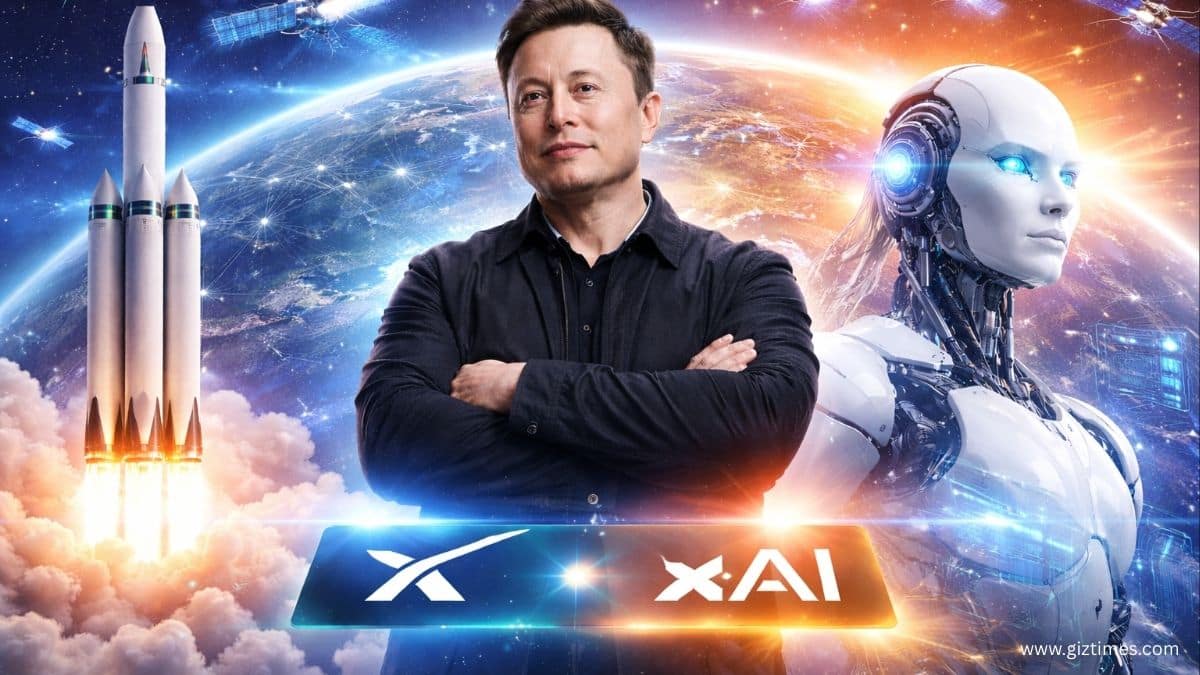
Elon Musk has made a massive move by merging his rocket company SpaceX with his new AI startup xAI. This deal creates one giant business worth a whopping $1.25 trillion. SpaceX brings a $1 trillion value from its rocket launches and satellites. xAI adds $250 billion from its fast-growing AI tech. The companies plan to sell shares on the stock market in June. That’s timed right around Musk’s birthday and a cool planetary alignment in space.
Why do this? Musk sees a huge problem with today’s AI. AI tools like chatbots and image makers need giant rooms full of computers called datacenters. These suck up tons of electricity from Earth’s power grids. They’re getting too crowded and expensive. Musk’s bold fix: Move the datacenters to space! He wants to launch up to a million satellites.
Each satellite would run using free energy from sunlight, so there would be no fuel costs. All of them would link together like a huge web, working as one giant computer in space.
Musk says this system could add 100 gigawatts of AI computing power every year. To compare, all the data centers on Earth together have only about 59 gigawatts right now. It’s like moving from a small car engine straight to a powerful rocket engine.
SpaceX is perfect for this because of its Starlink satellites already circling Earth for internet. Pair that with xAI’s brainy AI software, like the Grok chatbot, and you get a dream team. In a message to workers, Musk called it the “most ambitious innovation engine on—and off—Earth.” It could light up human smarts across the stars.
But xAI really needed this deal for money reasons. Last year, xAI burned through $13 billion building Grok and running X, the social media site once called Twitter. Giants like Google, Microsoft, Amazon, and Meta pour hundreds of billions into AI because they make cash from searches, shopping, and clouds.
xAI had no such backup. Merging with SpaceX opens the door to excited investors who love rockets. Investor Ross Gerber explains: “Musk is low on cash for xAI. SpaceX is super attractive—it pulls in money fast to fuel the AI race.”
https://x.com/MarioNawfal/status/2016960790650376380
Not everyone’s cheering. SpaceX shareholders who aren’t Musk worry their investment gets watered down to prop up xAI. Tech experts from Imperial College in the UK like the sun-powered satellite idea as a future win. But they point out real headaches. Single satellites can’t match Earth’s computer muscle yet—you’d need thousands working in sync. Links between them must be flawless to send data back to Earth users.
Space has harsh sun radiation that zaps electronics. And fixes? Earth’s datacenters get daily tweaks for broken parts. In orbit, shipping spares is crazy expensive and slow. You’d need smart designs for easy swaps.
Musk’s idea is very big and exciting. But making AI work in space is not easy. They still have to solve hard problems, like protecting computers from space radiation, keeping connections extremely reliable, and making sure everything is cheap to maintain.
Public reactions on (X) Twitter to this news combine humor, concern, and admiration.
One user sarcastically questioned whether the reported “talks happening” simply meant Elon Musk talking to himself, expressing skepticism about how serious or transparent the discussions really are.
https://x.com/cryptonole/status/2016961327852290066
Another user reacted with worry and humor, imagining the risks if AI were to malfunction during a space mission, which reflects public anxiety about relying on advanced technology in high-risk environments like space travel.
https://x.com/Jenny_ashfordxo/status/2016961025321656460
In contrast, a third tweet was positive, praising Elon Musk and suggesting that merger talks between SpaceX and xAI could take space technology to the next level.
https://x.com/CAPITAN0/status/2016960896740827542
If they succeed in the next 2–3 years, as Musk says, AI computing could become very cheap and almost unlimited. Everyone wins with smarter tools everywhere. If not, it’s another high-risk Musk bet that could fizzle.
