Bringing AI into the Real World: Robots Evolve Beyond Factories

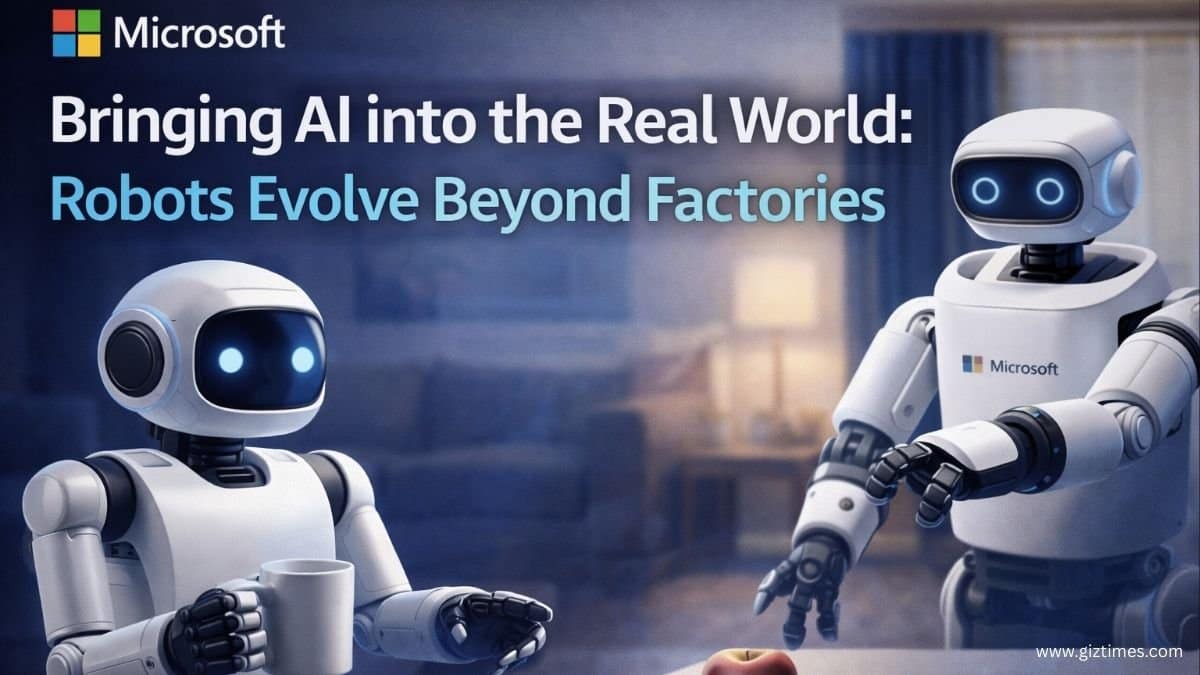
Microsoft just released Rho-alpha, a smart new AI model for robots. It’s built from their Phi series, which handles seeing, understanding words, and now acting in the real world. Robots used to work only in factories with fixed jobs. Now, with “Physical AI,” they can team up with people in messy, everyday places like homes or offices. This is like how ChatGPT changed writing—Rho-alpha will change robots.
Rho-alpha turns simple spoken or typed commands into robot movements. It controls two-armed robots or human-like ones for tasks like picking up objects with both hands. What’s special? It feels touch (tactile sensing) along with seeing and hearing words. Soon, it’ll sense force too. And it learns on the job from human tips, getting better at adapting to surprises or what people want. This makes robots safer and more helpful.
They trained the system using three main sources:
real videos of robots at work, simulated practice runs created on computers, and a large amount of online images paired with questions and answers.. So, they used NVIDIA’s Isaac Sim software on Microsoft Azure to create fake-but-realistic data with AI tricks like reinforcement learning. Experts like Professor Abhishek Gupta say this fixes problems where you can’t easily control robots by hand. NVIDIA’s Deepu Talla calls it a fast way to teach tough skills.
🤖 I’m happy to announce rho-alpha 🤖, @Microsoft's first physical AI model for bimanual robotic manipulation 🦾🦾 built on Microsoft’s own phi-series VLM:https://t.co/sPjtdU3m5n
Rho-alpha is unusual among VLAs in a few ways. You can think of it as a VLA+, as we are… pic.twitter.com/4P62lDP4gA
— Andrey Kolobov (@Andrey__Kolobov) January 21, 2026
If a robot makes a mistake, such as dropping an object, a person can quickly correct it using simple tools like a 3D mouse. The robot then immediately learns from this correction, so it does better next time.
Microsoft is focusing on making the system fast and easy to improve, and they are testing it on robots from their partner companies. A detailed technical report explaining how everything works will be released soon.
Want to try it? Sign up for Microsoft’s free early access program for your robots. Later, it’ll be on Microsoft Foundry for everyone to use. This lets companies train their own robot AI with private data.