Taara’s Laser Internet: Faster Than Starlink, Cheaper Than Fiber

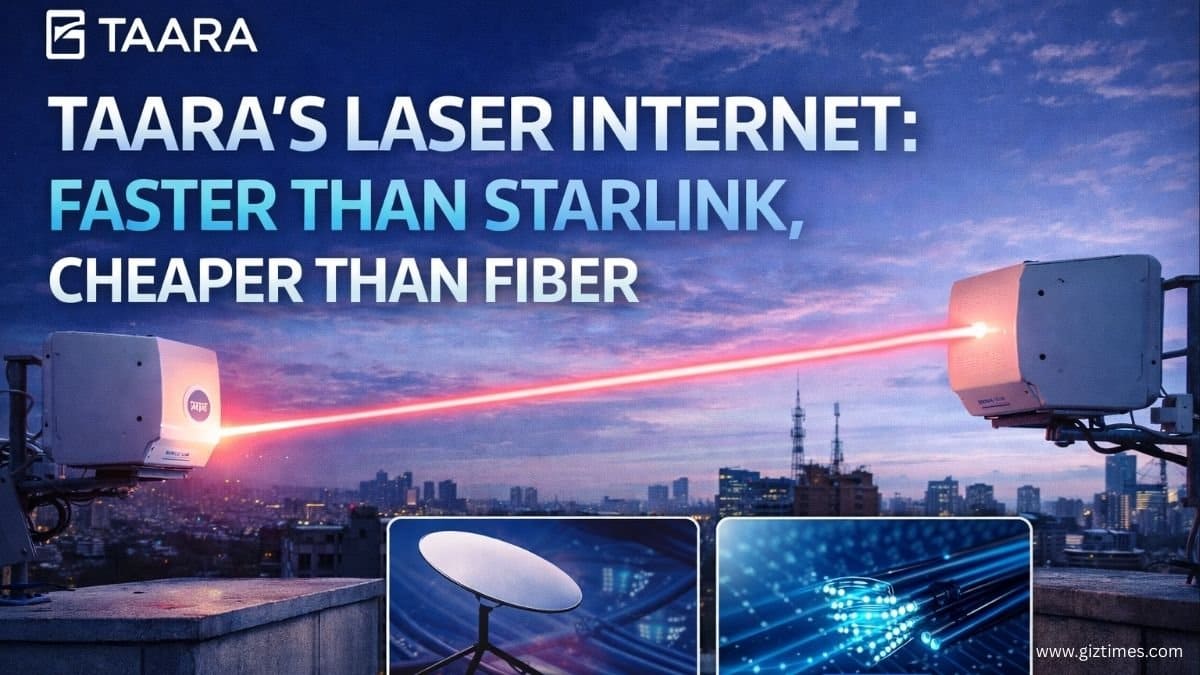
Taara is a new company that became independent from Alphabet, Google’s parent company, in March 2025. Instead of using cables underground or satellites in space, it sends the internet using laser light through the air. This technology is extremely fast—about 10 to 100 times faster than Starlink—making internet connections quicker and smoother. It is also much cheaper and quicker than digging roads to lay fiber-optic cables.
Taara is run by a small team of about 20 engineers based in Mountain View, California. Their goal is simple: to provide very fast and affordable internet to places where building traditional internet networks is difficult or expensive. Bring fast internet to places cables can’t reach, like remote villages or across rivers.
The magic is in devices called Lightbridges. They are about the size of a traffic light. They are placed on rooftops or poles where a clear line of sight between them is available. They shoot focused light beams carrying data up to 20 kilometers away at speeds of 20 gigabits per second. That’s enough for hundreds of people to stream videos at once—no digging holes or launching satellites needed—just line-of-sight light.
CEO Mahesh Krishnaswamy says Taara is made for difficult places that big companies usually ignore. He explains that their internet is much faster than using a Starlink dish and also costs less.
The company has already tested this technology in real life. In Kinshasa, Congo, it helped repair broken mobile phone networks. In Nairobi, Kenya, it connected different parts of the city with fast internet. At the Coachella music festival in California, organizers provided quick, reliable Wi-Fi to attendees.
Taara's Lightbridge terminals claim to offer fiber internet speeds without the cables by transmitting laser beams that utilize the same spectrum of light used in fiber optics. pic.twitter.com/0HqvmKqMg3
— CNET (@CNET) January 20, 2026
These tests show that Taara’s system works well even in rain or dusty conditions. Smart tracking technology keeps the laser beam steady, so the internet connection does not break.
In 2026, Taara plans to launch a very small chip, about the size of a fingertip. It will not need big mounts, mirrors, or complex equipment. You can simply plug it in and use it. Even though it is small, it can send data up to 20 kilometers using safe light waves. This makes setting up the internet very easy and low-cost—almost like changing a lightbulb.
Taara began as part of Alphabet’s earlier project called Project Loon. Project Loon used high-flying balloons to provide internet, but was shut down in 2021. After that, the team decided to use the same light-based technology on the ground instead.
Eric Teller, who leads Alphabet’s X lab, supported Taara becoming an independent company. He said that breaking away will help Taara grow faster and attract new investors.
Starlink uses satellites in space to give internet to very large and empty areas, like deserts or remote villages. Taara works differently. It connects nearby places on the ground, especially areas with many people, such as towns, cities, or big events.
Because of this, Taara and Starlink can work well as a team, Starlink can bring internet to very remote and empty areas, while Taara can give very fast internet to towns, cities, and crowded places nearby.
Right now, Taara is active in 12 countries. Its main goal is to help the 3 billion people around the world who still do not have reliable internet access.
Taara has not shared its prices yet, but the system is designed to be affordable. By using light instead of cables or satellites, this technology could bring fast and simple internet to poor or hard-to-reach areas and improve millions of lives.