Nintendo’s Tomodachi Life: Living the Dream, What are the New Restrictions Shaped by the Old Controversy

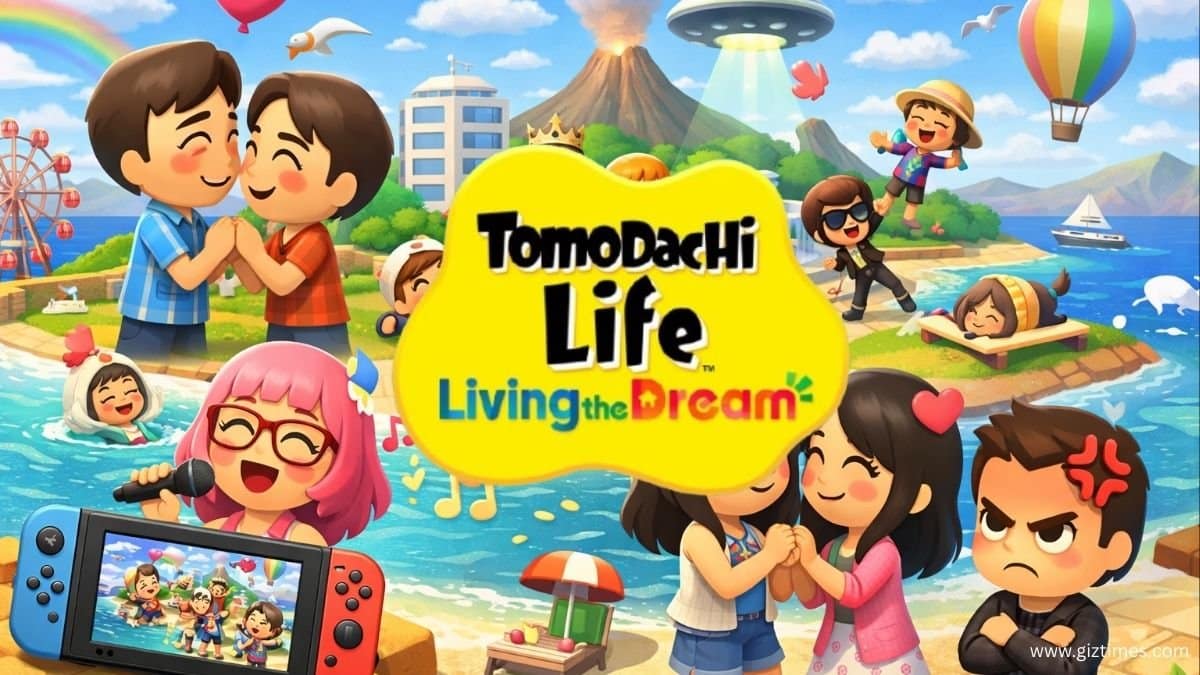
Nintendo has confirmed that Tomodachi Life: Living the Dream will launch on April 16, 2026, for the Nintendo Switch. The announcement ends years of waiting for a sequel to the 3DS cult hit, but it also comes with a major restriction: players will not be able to share in-game images online using the console’s built-in tools.
Players can still take screenshots using the Switch’s hardware button, but those images cannot be uploaded to social media or transferred directly to phones or other devices from the system. Nintendo has not said whether this restriction could change later.
The move is meant to prevent unexpected or controversial images from spreading online. This includes Miis appearing in awkward situations or characters resembling real-life celebrities. Nintendo has framed the decision for creating experiences that are safe, even if that means limiting how players share content.
Public reaction on X (Twitter) was sharply divided, reflecting excitement, irony, and backlash all at once.
A user expressed pure joy and personal excitement about the announcement.
finally theyre making it happen just in time for my birthday cant wait to see what its like
— Israfil (@IsrafilOnchain) January 29, 2026
Other one took a more critical and ironic tone, as seen in the second tweet, pointing out what they view as hypocrisy within the community—arguing that audiences readily accept absurd or unrealistic elements, but become uncomfortable when real-world social dynamics, such as relationships, enter the picture.
Funny how players accepted random singing, dream food, and chaos… but draw the line at who dates who…
— prayag sonar (@prayag_sonar) January 29, 2026
The third reaction represents a more openly hostile segment of the discourse, pushing back against LGBTQ representation and suggesting fatigue or resistance to inclusivity in mainstream content.
why do we need lgbtq representation in everything like we know yall exist
— lukas🦄 (@ladylikelukas) January 29, 2026
When Tomodachi Life launched on the Nintendo 3DS in 2014, it was meant to be a fun and strange life simulation game. Players were told that anything can happen. But soon after release, the game drew attention for something that could not happen: same-sex relationships.
After players spoke up, Nintendo faced strong criticism and responded with a public apology. Nintendo said they would try to do better in the future.
The problem was with how relationships worked in the game. Miis could fall in love and get married, but only as male and female couples. This upset many players and led to the #Miiquality campaign, where fans asked Nintendo to include same-sex couples and make the game more inclusive.
Nintendo replied that the feature could not be added later because the game was based on its Japanese version, where same-sex marriage was not part of the original design. While the game itself was not changed, Nintendo admitted it had let some players down.
This controversy stood in contrast to how the game was first shown to the public. Coverage from IGN focused on how unusual and funny Tomodachi Life was. Players did not control their characters directly.
Instead of controlling everything, players simply watched the Miis live their lives. They made friends, got into fights, sang silly songs, and often acted in surprising ways. It was fun because gamers couldn’t fully control it, and its humor was based on these random moments.
According to reports, the backlash over missing same-sex relationships made Nintendo think about more than just the game. It pushed the company to reflect on its choices and how they affected players. The company said it would make inclusivity a core part of any future version of Tomodachi Life. This was unusual for Nintendo, which rarely comments publicly on social issues tied to its games.
Tomodachi Life was first released in Japan as Tomodachi Collection: New Life and became a huge success there. The game stood out because it was strange and different, unlike Nintendo’s safer and more familiar series like Animal Crossing. But once it reached players around the world, its flaws became easier to notice—especially for people who didn’t see themselves represented in the game.
Over time, Nintendo began to follow through on its promise and made many clear changes such as Fire Emblem: Fates added same-sex relationship options, and Animal Crossing: New Horizons removed gender-locked choices, giving players more freedom to expression.