

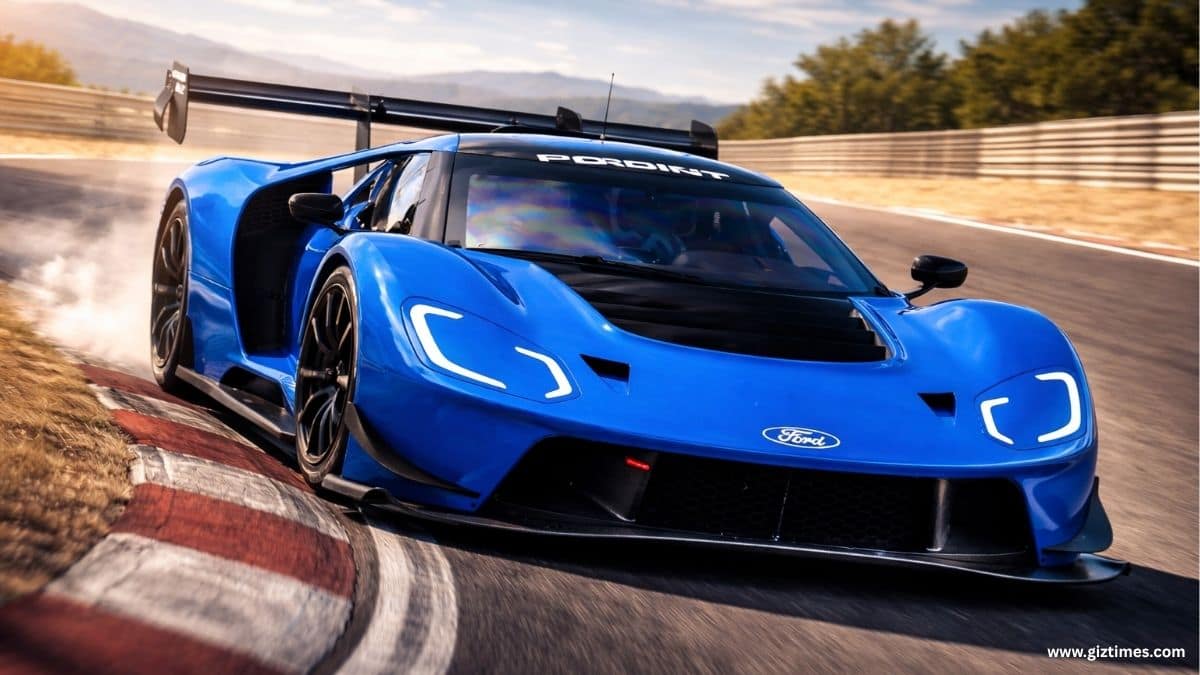
At the Nürburgring Nordschleife, one of the most demanding race tracks in the world, Ford has set a new benchmark with its track-only GT Mk IV. The car clocked a lap time of 6 minutes and 15.977 seconds, driven by factory racer Frédéric Vervisch. This run stands out because it makes the GT Mk IV the fastest American car ever around the track and the quickest internal combustion (gas-only) vehicle to do so.
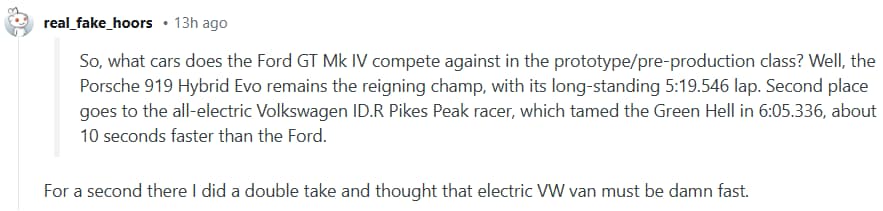
The lap puts the GT Mk IV third overall in Nürburgring history. Only two cars have gone faster, both using electric or hybrid systems. The Porsche 919 Hybrid Evo still holds the top spot with a much quicker time, followed by the Volkswagen ID.R electric race car. Despite that, Ford’s result is notable because it achieved this pace without any electric support, which is becoming rare at this level of performance.
The car also beat several well-known rivals. It was more than 14 seconds faster than the Mercedes-AMG One, which previously held the fastest time for a production-based hybrid car. It also outpaced electric hyper cars like the Lotus Evija prototype and Xiaomi SU7 Ultra prototype. Compared to other gas-powered cars, the gap is even larger, with older records like the Porsche 911 GT2 RS sitting far behind.
This performance comes from a heavily modified machine. The GT Mk IV uses a custom-built twin-turbocharged 3.8-liter V6 engine producing over 800 horsepower. It sits on a carbon-fiber chassis developed by Multimatic and features a longer body design to improve stability. The car’s aerodynamic setup generates massive downforce, helping it stay fastest through the track’s fast corners.
The GT Mk IV is not road-legal and is built only for track use. At around $1.7 million, it is aimed at a very small group of buyers. Even so, it shows what is possible when engineers focus solely on performance, free from everyday constraints.
This result matters because it comes at a time when most high-performance records are being set by electric or hybrid cars. Ford’s lap shows that traditional engines still have strong potential when pushed to the limit. It also highlights how track-only cars can go far beyond what road cars are capable of, even when they share a similar base.
Public reaction online has been mostly positive, though there has been some debate. One user wrote, “Fastest American car ever AND fastest ICE car? Ford really came to play!” This shows clear excitement about the achievement.

At the same time, some users questioned the details, especially how track layouts and categories affect records.

This mix of praise and doubt reflects a wider trend in which enthusiasts celebrate performance while also scrutinizing how records are defined.

The upcoming official confirmation and potential future attempts will likely determine whether Ford’s claim as the fastest gas-powered car remains unchallenged.
