

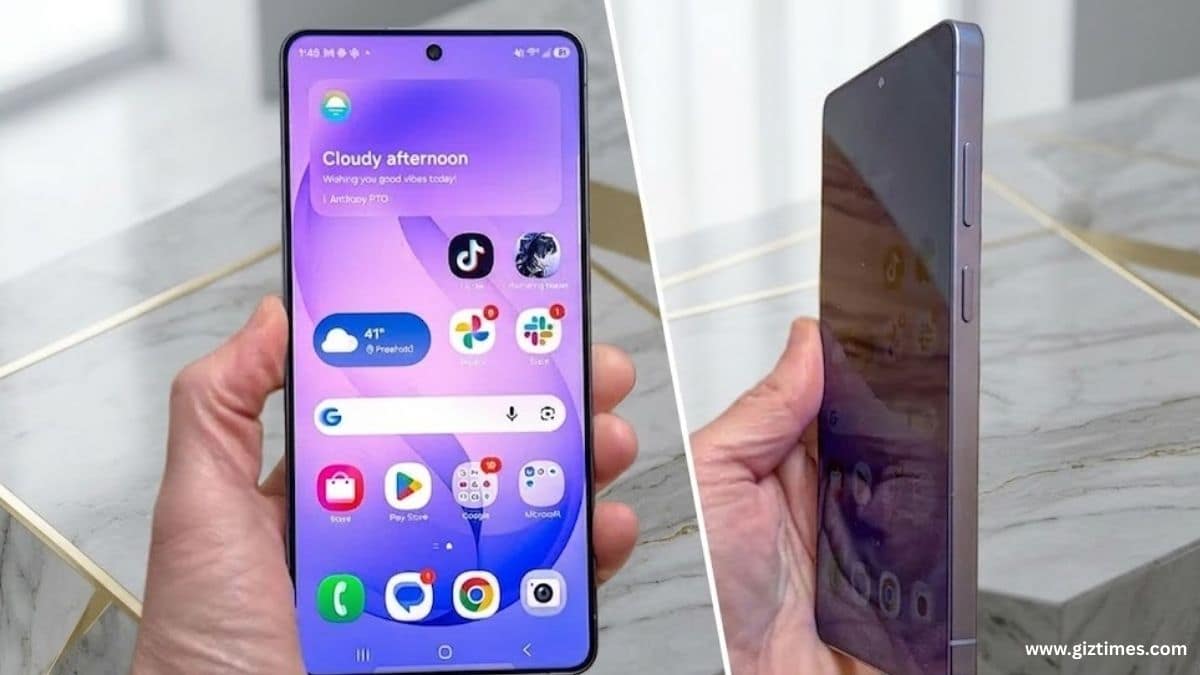
The Samsung Galaxy S26 Ultra’s 6.9-inch Dynamic AMOLED screen is marginally dimmer than the Galaxy S25 Ultra’s by just a few nits in benchmarks, prompting user complaints of eye strain and reduced brightness. This holds true even with the new Privacy Display feature disabled, potentially due to subtle changes in pixel configuration for enhanced off-angle privacy. Samsung rates both at 2600 peak nits, but real-world tests reveal tiny gaps that most users won’t notice at a glance.
Returning my S26 Ultra the new display is making me nauseous
by
u/CarXTech in
samsunggalaxy
In side-by-side comparisons, the S25 Ultra edges out with 1328 nits (adaptive brightness on) versus the S26 Ultra’s 1303 nits, and 1282 nits versus 1272 nits (adaptive off). Color gamut scores are nearly identical (sRGB: 151 vs. 151.5; DCI-P3 volume: 106.9 vs. 107.3), making differences negligible in everyday use.
TechRadar tester noted no personal eye strain after extended use, describing the S26 Ultra screen as “bright, clear, and color-rich” when viewed straight-on. However, off-angle viewing amplified the dimness, suggesting Privacy Display’s wide-pixel tech alternating narrow and wide pixels, with wide ones disabled for privacy lingers in default mode. Samsung confirmed that enabling Maximum Privacy Protection dims contrast intentionally, but offered no comment yet on default-mode tweaks.
Future Labs data underscores the slim variances: HDR brightness with adaptive on at 1303 nits for S26 Ultra versus 1328 for S25 Ultra, and adaptive off at 1272 versus 1282; sRGB gamut at 151 versus 151.5; DCI-P3 volume at 106.9 versus 107.3. Neither phone hits the full 2600-nit spec under HDR conditions, a common flagship limitation.
For the visual test, both phones were set up the same way. They had the same software updates and the same screen settings, including resolution and brightness. Adaptive brightness was turned off, and the Privacy Display feature on the S26 Ultra was also disabled.
When the two phones were placed side by side with their screens facing up, the S25 Ultra looked slightly brighter when viewed straight on. When the screens were viewed from an angle, the difference became more noticeable, with the S25 Ultra looking much brighter. This suggests that the two phones may use slightly different pixel arrangements in their displays.
Many posts on Reddit and other online forums say that the Galaxy S26 Ultra display is causing problems like nausea and eye strain for some users. At first, people blamed the Privacy Display feature. This is a hardware feature that blocks people on the sides from seeing your screen by turning off certain wide-view pixels.
When this feature is turned on, especially at the highest setting, it can make colors look less bright and less vibrant when viewed straight on. This happens because the phone is designed to protect your privacy and stop people nearby from seeing your screen. When the feature is turned on, it changes how the screen works to limit side viewing.
When the feature is turned off, the effect should normally go away. However, some users say the screen still looks a little dim. This may be because the phone’s pixels are set up slightly differently, even when the privacy feature is not being used.
The reviewer also took photos to compare the phone displays and contacted Samsung to ask about the difference. However, the company has not yet responded.
Even with these concerns, the reviewer said they personally did not face any problems with the display. They still believe the Galaxy S26 Ultra is one of the best Android phones because it has a powerful AI-ready chip, great cameras, Super Steady Video, and a premium design.
Samsung has said that the Privacy Mode can make the screen a little dimmer, but it has not publicly talked about any difference in the normal display brightness. The article suggests that this small change is a reasonable trade-off. A tiny drop in brightness helps the phone block people nearby from seeing the screen, giving users better privacy without depending only on software.
There is no sign of a major defect or widespread problem with the display. The brightness difference is so small that many people may not even notice it in normal use. Most users who own the S26 Ultra will likely see the same bright and colorful screen that the reviewer described. Still, transparency is urged: Samsung should clarify Privacy Display’s default impact on brightness and saturation.
This problem is not a dealbreaker for most people. The S26 Ultra is still a very good phone, and its screen is almost the same as the S25 Ultra, except for the new privacy feature. Some complaints may be happening because certain users are more sensitive to display changes or because they compared the phones side-by-side instead of using the S26 Ultra on its own.




For people who care a lot about privacy, this feature can actually be useful because it helps stop others from seeing the screen. But users who prefer the brightest possible display might prefer the S25 Ultra instead. Samsung may soon respond to these concerns, which could help clear things up. For now, the screen may look slightly dimmer, but the difference is very small.
