

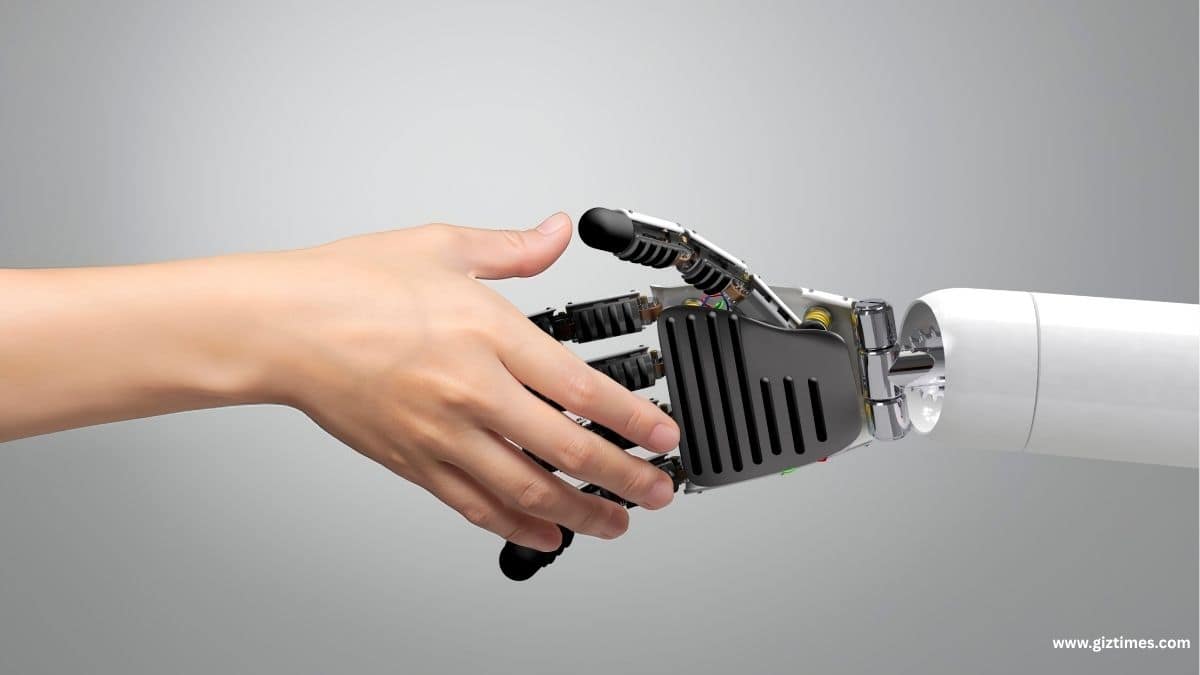
ANUPPUR, India (GizTimes) — AI systems are about to enter a new era. In contrast to the previous focus on developing AI systems capable of producing content or answering questions, agentic AI systems are becoming a new reality, which are going to represent intelligent digital laborers able to plan their work, make decisions, use resources and complete processes without much human intervention involved. Such a change marks a new level of capabilities and participation of technologies in work.
Contrary to conventional AI systems, which require constant human prompting and assistance, agentic AI is able to analyze the tasks independently, gather relevant information, and complete multi-step processes. With the adoption of such AI technologies in the software development industry, health care, manufacturing, and other spheres, a revolution in the way human beings work is happening. The key question here is not how AI systems are helping human beings anymore, but how intelligent autonomous systems are changing our productivity by easing the cognitive burden of our work.
Reasons for This to Be Occurring
The advent of intelligent agents stems from an increasing gap between the ever-growing intricacy of processes and the capacity of people to deal with them effectively. Enterprises now use software applications that operate in disparate environments and work with massive amounts of data. They can automate actions and processes, although traditional automation tools cannot reason about a problem.
An essential aspect of agentic AI systems is the capacity to reason, learn, and plan activities. Thus, they can break down tasks into sub-tasks, preserve context throughout long processes, access organizational knowledge databases, retrieve relevant information, and integrate with other applications via software tools and APIs. Unlike conventional assistants, they participate actively in business operations.
This fact is reflected in the pace at which agentic systems have been adopted by enterprises. Although only 35% of businesses had deployed such solutions by the end of 2023 and another 44% were planning on doing so soon after, by early 2026 more than 65% of enterprises had automated their operations with agentic AI tools. Therefore, they no longer consider content creation the most valuable application of intelligent agents.
In this case, however, an important observation needs to be made. Although the benefits of automation are obvious, the actual advantage offered by intelligent agents does not lie in speed alone. The secret of agentic AI systems is continuity. Much time is spent switching contexts within complex workplace environments. Intelligent agents minimize such interruptions by being aware of multiple tasks and performing actions without human input.
The Measure of Reduction in Human Effort: Mental Friction Score
When measuring the impact of AI agents in various business processes, it makes the most sense to use the metric of Mental Friction Score that represents the level of mental work needed to perform an action or finish a job.
A typical process workflow causes huge amounts of mental friction since workers are expected to constantly collect information, interpret it, shift between different apps, memorize contextual data, analyze results, make numerous decisions, and control various activities manually.
On the other hand, agentic artificial intelligence is able to reduce all these factors drastically. For example, due to task decomposition and planning abilities, agents are capable of converting general goals into actual workflows that should be carried out. Also, thanks to memory capabilities, agents do not have to repeatedly ask users about certain details because they are able to maintain context during all sessions.
In case agents are capable of invoking tools and applications, they become capable of retrieving information directly from databases and using different services automatically thus cutting down many manual operations.
However, when agents possess the ability to carry out Agentic RAG tasks, they are able to independently gather and validate all required information, break complex questions into several smaller questions, retrieve evidence, and synthesize information. In other words, information searching and validation processes are automated.
The outcome is a workplace where staff spend much less time coordinating and performing actions and more time analyzing their results.
Comparing Generative AI to Agentic AI
The advancement from generative AI to agentic AI involves a change from assisting with tasks to executing them. The former only reacts to prompts, whereas the latter not only engages in but is directly involved in helping complete objectives.
| Dimension | Traditional Generative AI | Agentic AI |
|---|---|---|
| Primary Function | Generates content based on prompts | Executes multi-step workflows autonomously |
| Context Handling | Limited to immediate context windows | Uses memory systems across sessions |
| Decision-Making | Reactive | Proactive and goal-oriented |
| Tool Usage | Limited or manual | Dynamic API and tool invocation |
| Workflow Capability | Single interaction focused | Multi-step task execution |
| Human Involvement | Continuous prompting required | Minimal oversight for many tasks |
| Information Retrieval | Static knowledge with limited retrieval | Iterative, evidence-based retrieval and validation |
| Operational Role | Assistant | Digital worker and workflow participant |
The comparison highlights that the major shift is not improved response quality alone. It is the expansion of AI from a communication interface into an operational system capable of carrying work forward independently.
Why It Matters
The ramifications of agentic AI go much deeper than mere individual efficiencies. This technology transforms how organizations design their workflow.
For instance, in software engineering, autonomous agents can design architecture, write code, test it, find bugs, and implement production-ready fixes. The autonomous system created by Cognition’s Devin is responsible for writing 89% of the internal codebase of that organization. Similarly, companies like Mercedes-Benz cut an eight-month legacy modernization initiative to just eight days through autonomous cloud agents. Itaú achieved automation of 70% of its security vulnerability patching process with the help of agentic AI.
This shift towards agentic AI is also observed in healthcare administration, where the use of agent-based systems has cut prior-authorization approval times by half while reducing the time spent on eligibility checks from hours to seconds by autonomously combining information from several databases.
Even research and analytics are no exception. Multi-agent systems can search for relevant literature, check the evidence, conduct citation network analysis, clean data, and even produce analytics reports. Work that once took weeks to complete manually now takes hours.
Regardless of the sector under consideration, there is one thing that stands out about agentic AI.
Extra Insights
The prevalence of AI agents indicates one crucial change in the function of humans. It appears that corporations do not replace whole jobs, rather, they are automating particular types of work – namely coordination, information retrieval, synchronization, and routine tasking.
It leads to a new division of labor where agents take care of operational execution whereas humans take care of oversight, planning, relationships, ethics, and innovation. Modern workplaces thus do not feature a struggle between humans and machines but rather orchestration of the two.
However, there are some difficulties that agentic workplaces may entail. For instance, the use of multiple agents within a single process can result in a fifteen-fold increase in token usage, thus raising questions about cost optimization. Furthermore, autonomous agents carry new risks for organizations like tool misuse, memory poisoning, cascading errors, and agent goal hijacking.
As much as AI agents simplify modern work and reduce its cognitive and operational demands, the key problem will revolve around reliability, security, and alignment with human values as automation increases.
Read More:
