

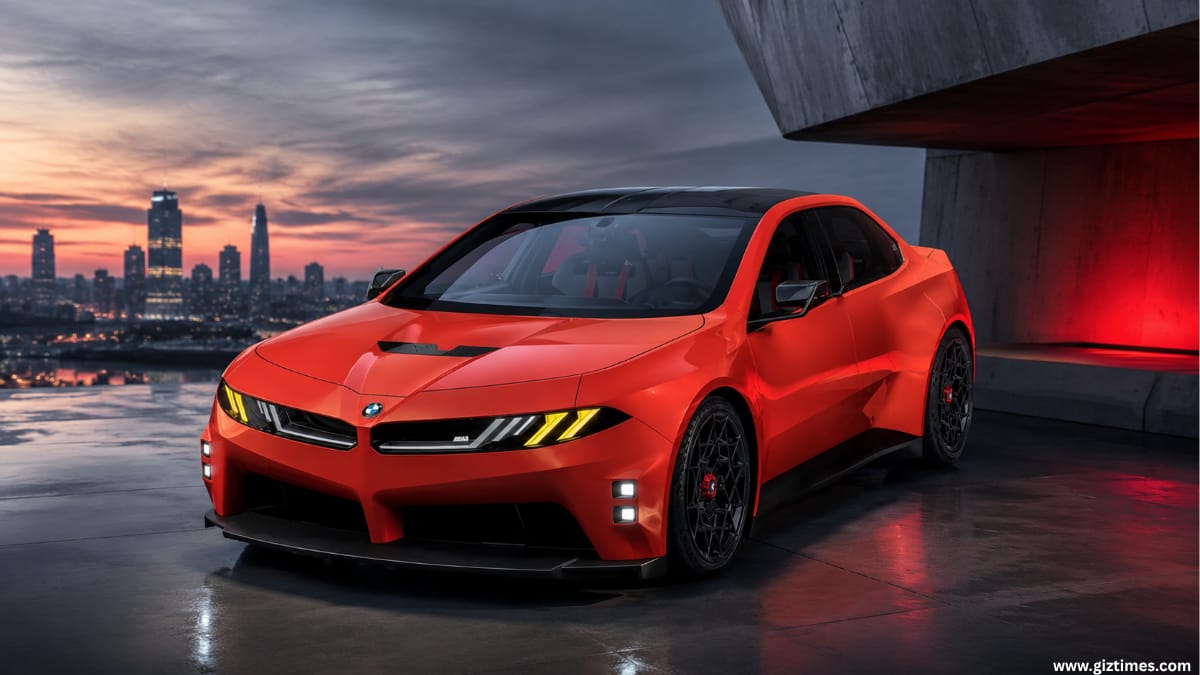
HYDERABAD, India (GizTimes) —The BMW Vision Neue Klasse X and the closely related BMW M Concept Neue Klasse preview a fundamental shift in how BMW intends to build performance vehicles in the electric era. While many manufacturers have pursued EV performance through increasingly higher power outputs and faster acceleration, BMW is signaling a different direction.
Built on the upcoming Neue Klasse architecture, the concept introduces new computing systems, next-generation software integration, advanced electric drivetrains, and a redesigned user interface. The key question is not how much power future BMW M EVs will produce, but whether software can preserve the driver engagement that has historically defined the M badge.
Why This Vehicle Exists
BMW’s challenge is straightforward. Electric vehicles can deliver extraordinary acceleration, but performance enthusiasts often judge a car by more than straight-line speed. Steering response, chassis balance, power delivery, and predictability under load remain equally important.
The Vision Neue Klasse X exists because BMW believes electrification alone is not enough to sustain its implementation identity. Future M vehicles are expected to retain precision handling, rear-biased characteristics, track capability, and driver feedback despite the transition to electric propulsion.
What stands out is BMW’s decision to focus on how performance is controlled rather than how much performance is available. The company’s emphasis on linear power delivery and predictable handling suggests an attempt to recreate the confidence drivers associate with traditional M cars.
A non-obvious implication emerges from the data. BMW appears to be treating computing power as a performance component, much as previous generations treated engines, suspensions, or differentials. If successful, future competitive advantages may increasingly come from software architecture rather than purely mechanical hardware.
Framework Integration
The Vision Neue Klasse X combines automotive engineering with a software-centric architecture.
At the center of this strategy is BMW’s new control system, known as the Heart of Joy. Rather than relying on multiple independent controllers, the system integrates power delivery, braking, steering, energy recuperation, stability management, and overall vehicle dynamics into a highly centralized computing platform.
BMW claims the system processes information up to ten times faster than previous architectures. That matters because electric vehicles generate and distribute torque almost instantly. Faster processing allows the vehicle to coordinate multiple dynamic systems simultaneously, making reactions feel more natural and predictable during aggressive driving.
This approach aligns with the broader Neue Klasse platform strategy. The architecture is designed to support next-generation batteries, improved efficiency, faster charging, and deeper software integration. Instead of viewing the vehicle as separate mechanical and electronic systems, BMW is moving toward a software-defined model where hardware and software operate as a single performance ecosystem.
The same philosophy extends to the cabin. Panoramic Vision projects information across the entire width of the windshield base, while the simplified dashboard reduces visual clutter. Rather than adding more screens, BMW is attempting to make information easier to access without distracting the driver.
Even the exterior design reflects this integration. Aerodynamically optimized surfaces, short overhangs, muscular proportions, and heritage-inspired styling create a bridge between BMW’s historical performance identity and its future electric ambitions.
Comparison
The comparison between BMW’s concept and Porsche’s current benchmark electric performance sedan reveals two distinctly different strategies.
Porsche focuses on proving what is possible today through measurable performance figures, charging capability, and track-oriented engineering. BMW’s concept focuses on the systems that may shape future performance vehicles.
| Category | BMW M Concept Neue Klasse | Porsche Taycan Turbo GT |
|---|---|---|
| Vehicle Type | High-performance EV Concept | Production High-performance EV Sedan |
| Platform | Neue Klasse | Taycan Architecture |
| Key Technology | Heart of Joy Control Computer | Silicon-carbide Rear Pulse Inverter |
| Performance Focus | Software-controlled driving dynamics | Maximum power and acceleration |
| Power Output | Not disclosed | 760 kW (1,034 PS) |
| Torque | Not disclosed | 1,240 Nm |
| 0–100 km/h | Not disclosed | 2.3 seconds |
| Top Speed | Not disclosed | 305 km/h (Weissach Package) |
| Charging Focus | Faster charging planned through Neue Klasse | 10–80% in approximately 18 minutes |
| Interior Technology | BMW Panoramic Vision | Driver-focused performance cockpit |
| Core Philosophy | Driver Engagement + Electrification | Track Capability + Extreme Performance |
The contrast is revealing. Porsche showcases the results of electric performance. BMW is showcasing the infrastructure intended to shape future electric performance.
Public Reaction Analysis
The reactions provided reveal a pattern that extends beyond styling preferences.
One user described the concept as the first electric vehicle they genuinely wanted to buy, while another compared it favorably against newer performance models from rival brands. These responses suggest that BMW may be succeeding in an area where many EV concepts struggle: emotional appeal.
Interestingly, neither reaction focuses on horsepower, charging speed, or acceleration. Instead, both center on desirability and design. This aligns with BMW’s broader strategy. If the company can convince enthusiasts that an electric M car remains aspirational, the transition from combustion performance to software-defined performance becomes significantly easier.
The reactions also show a willingness among traditional enthusiasts to wait for production versions, implying confidence that the concept represents more than a temporary design exercise.
Why It Matters
The Vision Neue Klasse X highlights a larger shift occurring across the automotive industry.
As electric powertrains become increasingly capable, performance differentiation becomes harder to achieve solely through acceleration. Software, computing architecture, and integrated vehicle control systems are emerging as the next battleground.

BMW’s approach suggests that future performance rankings depend less on peak output numbers and more on how effectively software coordinates steering, braking, torque delivery, energy management, and driver interaction.

The Neue Klasse platform also symbolizes a broader technological reset involving batteries, manufacturing processes, vehicle architecture, and software systems. That makes the concept strategically important not only for BMW M, but for BMW’s entire future electric lineup.
Final Takeaways
The design language serves a dual purpose. By referencing the original Neue Klasse models while introducing futuristic aerodynamic elements, BMW aims to preserve brand continuity amid one of the industry’s largest technological transitions.
Another interesting detail is the absence of headline performance figures. Most performance concepts use acceleration numbers to dominate the discussion. BMW instead highlights computing speed and vehicle control architecture, reinforcing the idea that its priorities are shifting toward software-defined performance.
Much of the discussion now centers on software-controlled driving dynamics, which could define the future identity of high-performance electric BMW M vehicles.
