

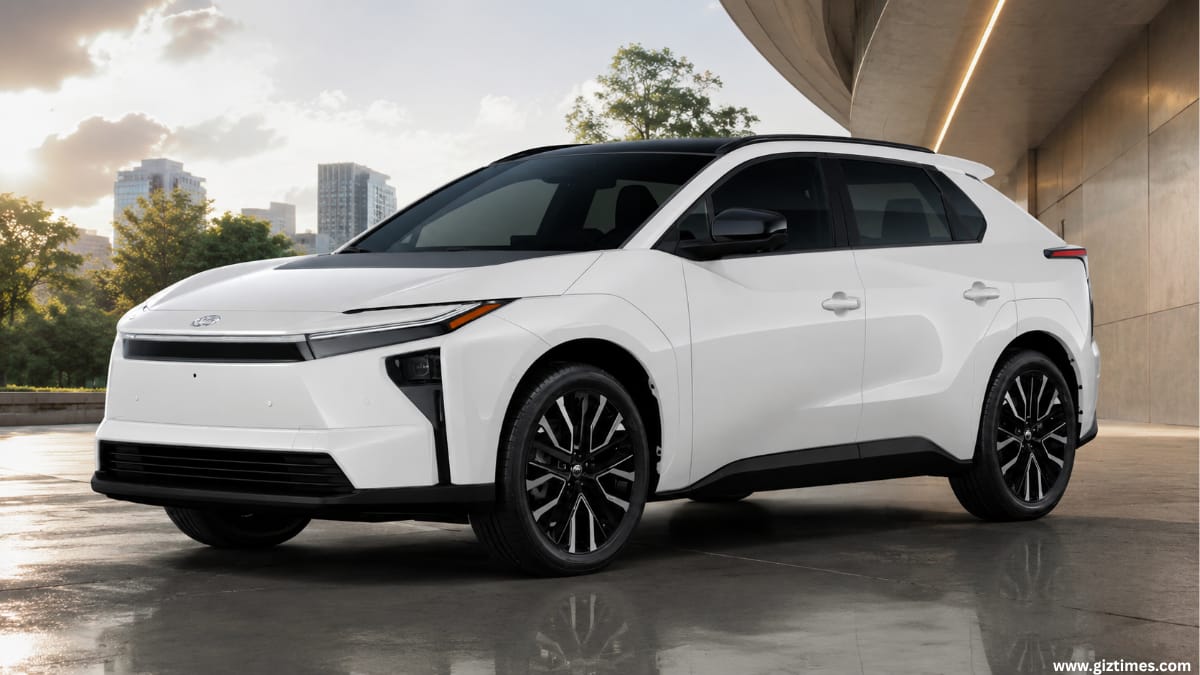
HYDERABAD, India (GizTimes) —Toyota has significantly reworked its electric SUV strategy with the 2026 Toyota bZ. Beyond the simplified naming that replaces the previous bZ4X badge, the vehicle arrives with substantial improvements in range, charging capability, performance, and cabin technology. On paper, the headline figures are impressive: up to 314 miles of estimated range, up to 338 horsepower, a 0–60 mph time of 4.9 seconds, and native access to Tesla’s Supercharger network.
What makes this update noteworthy is not any single specification. The more important story is how Toyota has redirected its EV development toward solving practical ownership challenges that have historically limited adoption.
Why This Vehicle Exists
The original bZ4X entered a market where buyers increasingly judged electric vehicles on three factors: range confidence, charging convenience, and everyday usability. The 2026 bZ directly targets all three.
Toyota now offers two battery configurations: a 57.7-kWh pack for the XLE FWD and a larger 74.7-kWh battery for higher trims and AWD variants. The result is an estimated top range of 314 miles, making it Toyota’s longest-range EV to date.
Performance has also received a substantial boost. Front-wheel-drive versions produce between 168 hp and 221 hp, while AWD models reach 338 hp. The AWD variant’s 4.9-second sprint to 60 mph places it among the quickest mainstream electric vehicles Toyota has produced.
Yet the engineering logic behind these upgrades appears to be less focused on headline acceleration and more on reducing ownership friction. Faster charging, battery preconditioning, plug-and-charge functionality, and direct access to Tesla’s charging infrastructure collectively address concerns that often influence purchase decisions more than raw performance figures.
A non-obvious implication emerges from these changes. Toyota’s largest improvement is not range or horsepower individually. It is the reduction of uncertainty. By improving multiple ownership variables simultaneously, Toyota is attempting to make EV ownership feel more predictable rather than simply faster.
Framework Integration
The 2026 bZ represents a combination of automotive engineering refinement and software-enabled usability.
From the vehicle side, Toyota has upgraded battery options, increased motor output, and enhanced AWD capability through X-MODE traction management. The system is designed to improve grip on snow, dirt, and uneven surfaces, extending the vehicle’s usability beyond urban environments.
The technology layer is equally important. Battery preconditioning automatically prepares the battery before arriving at a charging station, helping maintain charging performance in colder conditions. Plug & Charge reduces charging complexity by automating authentication and payment processes. The integration of the North American Charging Standard (NACS) provides direct access to Tesla’s extensive Supercharger ecosystem.
Inside the cabin, Toyota has standardized a 14-inch touchscreen across the lineup. Wireless Apple CarPlay, Wireless Android Auto, dual wireless charging pads, digital key functionality, and Toyota’s latest multimedia platform reinforce a more software-centric ownership experience.
What stands out is how these technologies are interconnected. The charging system, battery management, and connected services are not isolated features. Together, they create a smoother ownership cycle where route planning, charging access, battery preparation, and vehicle connectivity operate as parts of a larger ecosystem.
This reflects a broader industry shift toward software-defined mobility, where convenience and system integration increasingly matter as much as traditional vehicle engineering.
Comparison
The Toyota bZ and Tesla Model Y approach the electric SUV segment from different directions. Tesla continues to emphasize software integration, efficiency optimization, and a mature charging ecosystem. Toyota’s latest strategy focuses on closing the practical ownership gap while maintaining the brand’s traditional emphasis on usability and safety.
| Specification | Toyota bZ (2026) | Tesla Model Y |
|---|---|---|
| Maximum Range | Up to 314 miles | Up to 622 km (WLTP) |
| Battery Options | 57.7 kWh / 74.7 kWh | Not provided |
| Maximum Power | 338 hp | Not provided |
| Acceleration | 0–60 mph in 4.9 sec | 0–100 km/h in 4.8 sec |
| Drivetrain | FWD / AWD | Dual Motor AWD |
| Charging Port | NACS | Tesla Supercharger Access |
| Fast Charging | 10–80% in ~30 min | Fast DC Charging |
| Charging Ecosystem | Tesla Supercharger Access + Plug & Charge | Tesla Supercharger Network |
| Infotainment | 14-inch Touchscreen | Large Central Touchscreen |
| Software Updates | Not specified | Over-the-Air Updates |
| Roof | Panoramic Fixed Glass Roof | Panoramic Glass Roof |
| Storage Advantage | Not specified | Rear Cargo + Frunk |
Based on the available data, Tesla still holds advantages in software-centric functionality and over-the-air update capabilities. Toyota’s strongest counterargument is its effort to combine competitive EV performance with charging accessibility and traditional automotive usability.
Public Reaction Analysis
The available user reactions reveal a fascinating divide between objective improvements and subjective perception.
One user acknowledged that the new bZ is better than the outgoing model but remained unconvinced by the driving feel, road behavior, and interior experience, ultimately choosing the Hyundai Ioniq 5. This suggests that numerical improvements alone may not fully change consumer perceptions formed by earlier versions of the vehicle.

Another reaction highlighted build quality and manufacturing standards, referencing positive impressions regarding construction quality and Japanese production. This indicates that Toyota’s long-standing reputation for quality remains a noteworthy differentiator even as the company transitions into the EV market.

Together, these reactions show that Toyota’s challenge is no longer purely technical. The company has improved charging, range, and performance, but some consumers continue to evaluate EVs based on experiential factors such as driving dynamics, cabin atmosphere, and emotional appeal. In other words, Toyota is winning the specification battle more quickly than the perception battle.
Why It Matters
The updated bZ reflects a broader evolution in the EV industry.
Early electric vehicles often competed primarily through battery size, acceleration, or range. Today’s market is increasingly focused on ownership ecosystems. Charging access, software integration, battery management, and long-term usability have become critical competitive factors.
Toyota’s adoption of NACS is particularly significant. By joining other major automakers that are embracing Tesla’s charging standard, Toyota is helping accelerate industry-wide convergence around charging infrastructure. This reduces fragmentation and potentially lowers one of the biggest barriers to EV adoption.
The vehicle also demonstrates that established manufacturers may not need entirely new products to remain competitive. Strategic upgrades focused on real-world ownership concerns can significantly improve market relevance without requiring a complete platform replacement.
Final Takeaways
The increase to 338 horsepower represents one of Toyota’s most substantial mid-cycle EV performance upgrades, indicating how rapidly the company is responding to market expectations.
Standardizing the 14-inch touchscreen across all variants removes a feature hierarchy that often separates entry-level and premium trims, creating a more consistent user experience throughout the lineup.
Battery preconditioning may be more influential than headline acceleration figures, as charging consistency affects daily ownership more often than maximum performance.
Much of the discussion now centers on charging accessibility and convenience of ownership, which could define mainstream EV adoption in the coming years.
Read More:
- Boreham Ford Escort Mk1 RS: Why Lightweight Engineering May Be the Ultimate Performance Luxury
- Minecraft Dungeons II Launches September 29, Everything Revealed After the New Gameplay Showcase In YouTube Reveal Trailer
- AI Agents and Their Impact on the Changing Nature of Work via Intelligent Automation
