

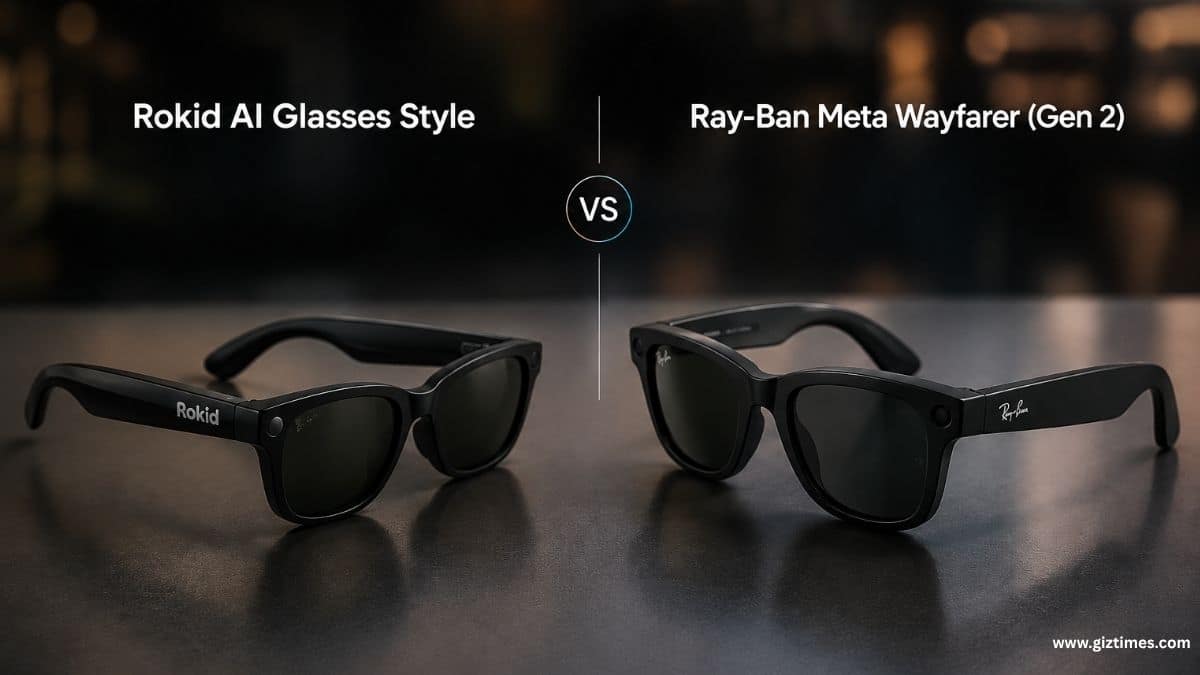
Smart glasses are entering a new phase. Instead of chasing bulky augmented reality displays, companies are focusing on eyewear that people can actually wear every day. The comparison between the Ray-Ban Meta Wayfarer Gen 2 and the Rokid AI Glasses Style highlights two very different ideas of what smart glasses should be.
Ray-Ban Meta focuses on blending premium fashion, mature software, high-quality cameras, and seamless AI assistance into a product that feels like normal eyewear. Rokid takes the opposite route, prioritizing extreme comfort, openness, and access to multiple AI ecosystems. The result is a battle between a polished consumer product and an experimental platform for AI enthusiasts.
Contrasting Approaches to the Future of Smart Eyewear
Meta’s approach is straightforward. Most people buying smart glasses are not looking for an AI laboratory on their face. They want glasses that look good, capture moments easily, play audio privately, and occasionally help with AI tasks. Everything from the classic Wayfarer design to the integrated charging case supports that goal. The technology disappears into the background.
Rokid is solving a different problem. It assumes that future wearable computing will revolve around AI access rather than display technology. By removing displays entirely and reducing weight to just 38.5 grams, Rokid is attempting to create a wearable AI endpoint that users can comfortably wear from morning to night. Its focus is less about fashion heritage and more about turning eyewear into a permanent AI companion.
The distinction becomes obvious when looking at how each company allocates resources. Meta invests heavily in camera quality, audio quality, software integrations, and lifestyle features. Rokid spends its engineering budget on weight reduction, modular power systems, and broad AI model compatibility.
Hardware Versatility and Ecosystem Agnosticism
The hardware comparison starts with weight because weight directly determines whether smart glasses become daily eyewear or occasional gadgets.
Rokid delivers an impressive engineering achievement at 38.5 grams, making it significantly lighter than the Ray-Ban Meta Wayfarer Gen 2, which operates around the 49–53 gram range depending on configuration. For users who wear glasses all day, this difference is immediately noticeable. Less weight means less pressure on the nose bridge and ears over extended periods.
Both products support prescription lenses, but Rokid pushes further with support for extremely strong prescriptions through multiple refractive index options reaching up to +15.00 diopters. Meta supports prescriptions between -6.00 and +6.00. For users with more demanding vision requirements, Rokid offers greater flexibility.
The ecosystem story is where the philosophies diverge sharply.
Meta’s AI ecosystem is powerful but controlled. Users operate within Meta AI’s framework, regional rollouts, and feature availability restrictions. Features such as Conversation Focus, Spotify integrations, multimodal vision analysis, and Be My Eyes create a polished experience, but the platform remains tightly managed by Meta.
Rokid embraces a far more open strategy. Depending on region, users gain access to ChatGPT, Gemini, DeepSeek, Qwen, and other AI platforms. This flexibility makes the device appealing to users who want choice rather than platform lock-in. Instead of betting on one AI provider, Rokid treats AI models as interchangeable services.
A non-obvious consequence emerges from this difference. Meta’s closed ecosystem actually creates a more predictable user experience because every feature is optimized around a single software stack. Rokid’s openness provides more freedom, but it also creates greater fragmentation across regions, firmware versions, and AI services. The product gains flexibility while sacrificing consistency.
Comparison
The most important distinction is that Ray-Ban Meta feels like eyewear enhanced by technology, while Rokid feels like technology disguised as eyewear.
| Category | Ray-Ban Meta Wayfarer Gen 2 | Rokid AI Glasses Style |
|---|---|---|
| Starting Price | $299 | $349 |
| Weight | Approximately 49–53g | 38.5g |
| Camera | 12MP ultra-wide | 12MP Sony IMX681 |
| Video Recording | Up to 3K 30fps | 4K video, up to 10-minute clips |
| Water Resistance | IPX4 | IPX4 |
| Prescription Support | -6.00 to +6.00 | Up to +15.00 diopters with multiple lens options |
| AI Ecosystem | Meta AI | ChatGPT, Gemini, DeepSeek, Qwen (region dependent) |
| Audio System | Open-ear speakers with 5-mic array | Open-ear AAC speakers with quad AI microphones |
| Battery Strategy | Charging case provides approximately six additional charges | Modular Power Capsule system available |
| Key Strength | Mature ecosystem and premium capture experience | Lightweight design and AI flexibility |
Public Reaction Analysis
The reactions reveal a recurring split in consumer expectations.
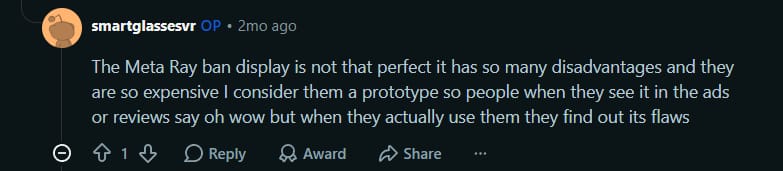
One group views current smart glasses as transitional products. The criticism that Ray-Ban Meta lacks a display and still feels expensive reflects a belief that smart glasses should provide visible digital information rather than operate primarily through audio and cameras. For these users, today’s products resemble prototypes rather than finished categories.
 Another group values practical utility over futuristic features. The positive feedback surrounding Ray-Ban Meta’s camera quality, audio performance, and prescription lens compatibility suggests many buyers evaluate the glasses as premium wearable cameras first and AI devices second. The fact that users continue keeping the product even when desired AI features are unavailable indicates that imaging and audio remain the primary drivers of satisfaction.

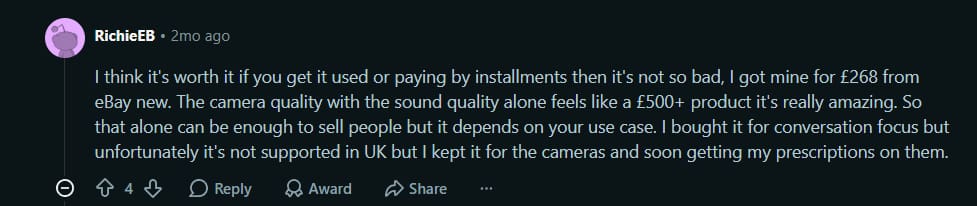 This creates an interesting contradiction. Enthusiasts often judge smart glasses by their AI capabilities, while actual owners frequently justify the purchase through photography, audio, and convenience. The market conversation focuses on AI, but user retention appears heavily tied to camera quality and everyday usability.
Why It Matters
This comparison demonstrates that the smart glasses market is splitting into two distinct directions.
Ray-Ban Meta represents the consumer-electronics path. The product prioritizes reliability, brand recognition, fashion credibility, and polished software experiences. Buyers know exactly what they are getting.
Rokid represents the enthusiast path. It prioritizes openness, customization, AI flexibility, and extreme wearability. Buyers gain access to multiple AI ecosystems but accept a less unified experience.
For most consumers, the Ray-Ban Meta Wayfarer Gen 2 remains the stronger overall purchase because its combination of luxury styling, mature ecosystem, superior charging convenience, and refined camera-audio experience delivers value every day rather than only during AI interactions.
For technology enthusiasts who constantly experiment with emerging AI models, Rokid offers something increasingly rare in consumer hardware: freedom of choice.
Other Keytakeaways
An interesting pattern appears across both products. Neither company believes displays are currently necessary for mass-market smart glasses. Despite approaching the category from different directions, both prioritize cameras, microphones, speakers, and cloud AI over traditional augmented reality hardware. This suggests the industry increasingly sees ambient AI as a nearer-term opportunity than full AR adoption.
The competition is no longer centered on display technology. It is increasingly becoming a contest between ecosystem quality and AI openness.
The upcoming generation of wearable AI updates will likely determine whether the open-AI smart glasses model succeeds or fails.
