

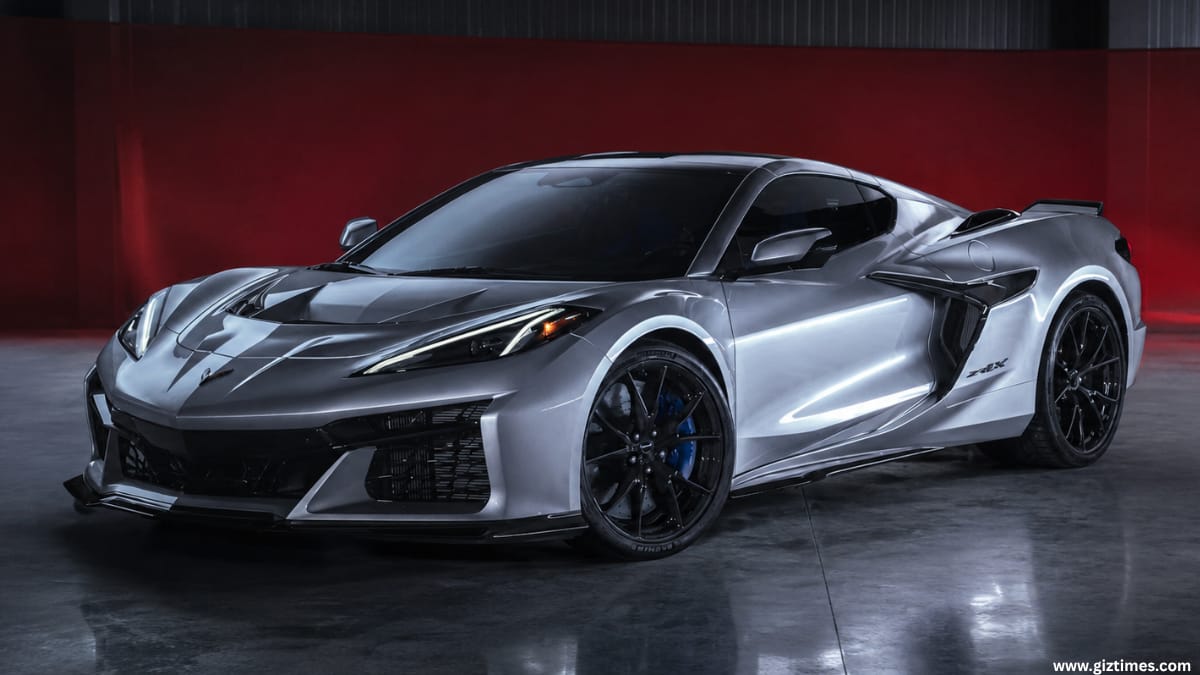
HYDERABAD, India (GizTimes) —The Chevrolet Corvette ZR1X represents the most ambitious performance leap in Corvette history. By merging the twin-turbocharged LT7 V8 from the ZR1 with the electrified front-axle system derived from the E-Ray, Chevrolet has created a 1,250-horsepower machine that pushes the Corvette beyond classic sports-car territory and directly into the hypercar conversation.
What makes the ZR1X particularly significant is not simply its headline power figure. The real story is how Chevrolet uses electrification as a performance tool rather than an efficiency solution. The result is a vehicle capable of reaching 60 mph in under two seconds while maintaining the everyday usability that has long defined the Corvette formula.
Why This Vehicle Exists
The ZR1X exists because traditional performance development is approaching physical limits. Adding more power to a rear-wheel-drive platform eventually creates traction challenges that limit real-world performance.
Chevrolet’s answer was not to abandon the V8 but to enhance it. The 5.5-liter twin-turbocharged flat-plane-crank LT7 V8 already produces 1,064 horsepower and 828 lb-ft of torque. Instead of routing even more power through the rear wheels, Chevrolet added a 186-horsepower electric motor on the front axle.
This decision solves multiple engineering problems simultaneously. The front motor provides instant torque, enables all-wheel drive without a mechanical connection between the axles, and improves acceleration by distributing power more effectively. The ZR1X, therefore, becomes more than a higher-output Corvette. It becomes a new performance architecture designed around maximizing every available unit of traction.
The strategy also reflects a broader industry shift. Rather than viewing electrification as a replacement for combustion engines, the ZR1X treats electric power as a performance multiplier.
Framework Integration: Performance Engineering Meets Advanced Vehicle Technology
The ZR1X is a clear example of how modern automotive performance increasingly depends on software and electrification working alongside mechanical engineering.
Its hybrid system differs from traditional plug-in hybrid designs that prioritize electric driving range. Chevrolet developed the battery system specifically for performance applications. The battery sits low within the chassis to improve weight distribution and center of gravity while rapidly capturing and deploying energy during aggressive driving.
The front electric motor becomes particularly valuable during corner exits. While a combustion engine must build torque through the driveline, the electric motor delivers immediate torque, helping the vehicle accelerate earlier and more effectively.
An even more important technological development is the new Performance Traction Management Pro (PTM Pro) system. Conventional stability systems often reduce performance to maintain control. PTM Pro takes a different approach by allowing skilled drivers to access the vehicle’s full capabilities while preserving critical processes such as regenerative braking management and launch control.
This reveals a deeper trend in performance-car development. The fastest vehicles are no longer defined solely by engine output. They increasingly depend on software coordination between power delivery, traction management, energy recovery, and chassis behavior. In the ZR1X, software becomes just as important as horsepower.
A non-obvious implication emerges from this architecture. The electric motor’s 186 horsepower represents only about 15 percent of the vehicle’s total output. Yet, it contributes disproportionately to acceleration performance because it operates precisely where traction and instant torque matter most. The hybrid system is therefore not simply about adding power; it is about strategically placing power where it can deliver the greatest performance benefit.
Comparison
The Corvette ZR1X and Ferrari SF90 Stradale approach hybrid performance from different directions. Ferrari developed the SF90 as a plug-in-hybrid supercar designed to showcase its electrification technology. Chevrolet developed the ZR1X as a performance-first hybrid focused on maximizing acceleration, traction, and track capability while retaining Corvette practicality.
| Specification | Chevrolet Corvette ZR1X | Ferrari SF90 Stradale |
|---|---|---|
| Powertrain | 5.5L Twin-Turbo Flat-Plane-Crank V8 + Front Electric Motor | 4.0L Twin-Turbo V8 + 3 Electric Motors |
| System Output | 1,250 hp | 986 hp |
| Drivetrain | Hybrid AWD | Plug-in Hybrid AWD |
| Electric Motors | 1 | 3 |
| 0–60 mph / 0–100 km/h | Under 2.0 seconds (0–60 mph) | 2.5 seconds (0–100 km/h) |
| Hybrid Philosophy | Performance-Focused Hybrid | Plug-in Hybrid (PHEV) |
| Notable Technology | PTM Pro, Electrified Front Axle | Torque Vectoring Front Motors |
Based on the available data, the ZR1X delivers a higher total power output while employing a simpler hybrid architecture. Ferrari emphasizes plug-in hybrid capability and multiple electric motors, whereas Chevrolet focuses on extracting maximum performance from a more targeted electrification strategy.
Public Reaction Analysis
Public reactions reveal an interesting pattern. Most attention is not focused on the hybrid system itself but on the credibility of the acceleration figures.
The reaction to the claimed 1.8-second acceleration demonstrates how the performance benchmark has shifted. Enthusiasts are no longer surprised that a Corvette can compete with supercars; they are now evaluating whether it can compete with the world’s quickest vehicles, regardless of segment or price.

Another reaction highlights Chevrolet’s decision to achieve these acceleration numbers using a street alignment rather than a track-specific setup. This detail matters because it suggests that Chevrolet is pursuing accessible performance rather than optimized performance in laboratory conditions. Enthusiasts are increasingly interested in how repeatable and usable performance figures are, not just how impressive they appear on paper.

Together, these reactions indicate that buyers now expect elite performance to be measurable, repeatable, and achievable outside ideal test conditions.
Why It Matters
The ZR1X represents a significant moment for American performance engineering.
For decades, hypercars were largely associated with European manufacturers such as Ferrari, Lamborghini, McLaren, and Porsche. The ZR1X enters that space with 1,250 horsepower, hybrid-assisted all-wheel drive, and acceleration figures that rival the industry’s most exclusive machines.
Its broader significance lies in its approach to electrification. Chevrolet is not presenting electric technology as a substitute for the V8 experience. Instead, the electric system enhances traction, responsiveness, and overall performance.
This approach may influence future performance vehicles across the industry. As emissions regulations tighten and performance expectations continue rising, hybrid systems that complement combustion engines rather than replace them could become an increasingly attractive solution.
Final Takeaways
The ZR1X demonstrates how performance cars are evolving into integrated systems rather than collections of individual components. Engine output, electric assistance, software control, battery management, and chassis dynamics now operate as a unified package.
The vehicle also highlights a growing trend toward software-defined performance. Features such as PTM Pro indicate that future competitive advantages come as much from control algorithms as from mechanical hardware.
At the same time, Chevrolet has preserved a key Corvette characteristic: usability. The ability to combine hypercar-level acceleration with road-car practicality remains one of the ZR1X’s most distinctive attributes.
Much of the discussion now centers on how effectively hybrid technology can enhance traditional performance engineering, a shift that could define the next generation of high-performance sports cars and hypercars.
