

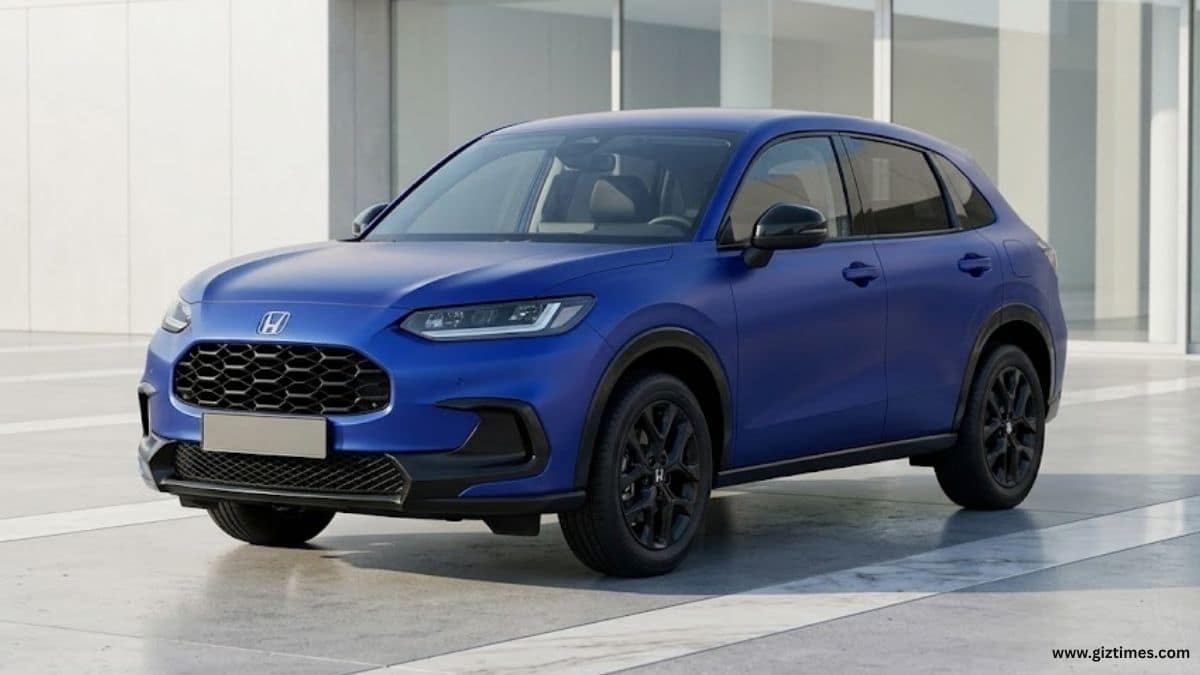
HYDERABAD, India (GizTimes) — Honda is getting ready to bring several new hybrid and electric cars to India over the next 12–15 months. This is part of its larger plan to launch 10 new models globally by 2030, with a clear focus on hybrid and electric vehicles. India is an important market in this plan, so more launches are expected here.
One of the first models likely to arrive is the Honda Prelude Hybrid, expected in the next two to three months. It will be imported into India as a fully imported model and sold in limited numbers. This will also be Honda’s return to the two-door coupe segment in India. The car uses a 2.0-litre petrol hybrid engine in global markets, producing around 197 bhp, and sends power to the front wheels. Its expected price of around ₹80 lakh (ex-showroom) means it will be a niche product for a small group of buyers.
Next is the Honda ZR-V Hybrid, which is expected to launch by the end of 2026. It sits below the CR-V in global markets and is more of a crossover than a full-size SUV. It is likely to get a 2.0-litre petrol hybrid engine producing about 177 bhp, along with an e-CVT gearbox and all-wheel drive. Since it will also be imported, its price is expected to be between ₹50–55 lakh (ex-showroom), which could affect how many people consider buying it.
Honda is also working on a new all-electric SUV for India, based on the 0 Alpha concept. This model is already being tested across the country and is expected to launch between January and March 2027. Unlike the other two, this SUV will be made in India at Honda’s Tapukara plant, and it will also be exported to other markets.
The electric SUV is expected to offer battery options of 60-75 kWh, with a claimed range of up to 450 km on a full charge. It is likely to include features such as connected-car tech, a panoramic sunroof, and Level 2 ADAS. The expected price range of ₹20–25 lakh (ex-showroom) will place it above the Honda Elevate.
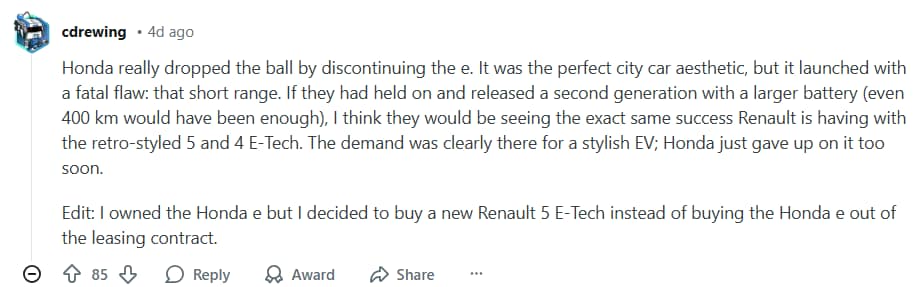
Public reactions on Reddit show some frustration with Honda’s past decisions. Some users feel the company often makes the right moves at the wrong time. They pointed to examples like Honda leaving Formula 1 before seeing success and believe the brand sometimes misses simple opportunities, such as bringing back older popular models in a modern electric form.

Others focused on the discontinued Honda e, saying it had strong design appeal as a city car but failed because of its limited driving range. According to them, if Honda had improved the battery and continued the model, it could have competed well with newer stylish EVs in the market. Overall, these reactions suggest that while people see potential in Honda’s plans, they are unsure about how well the company executes its ideas.
With these launches, Honda is expanding its presence in the hybrid and EV space in India. The success of these models will depend on pricing, features, and how well they match buyer expectations in a competitive and price-sensitive market.
