

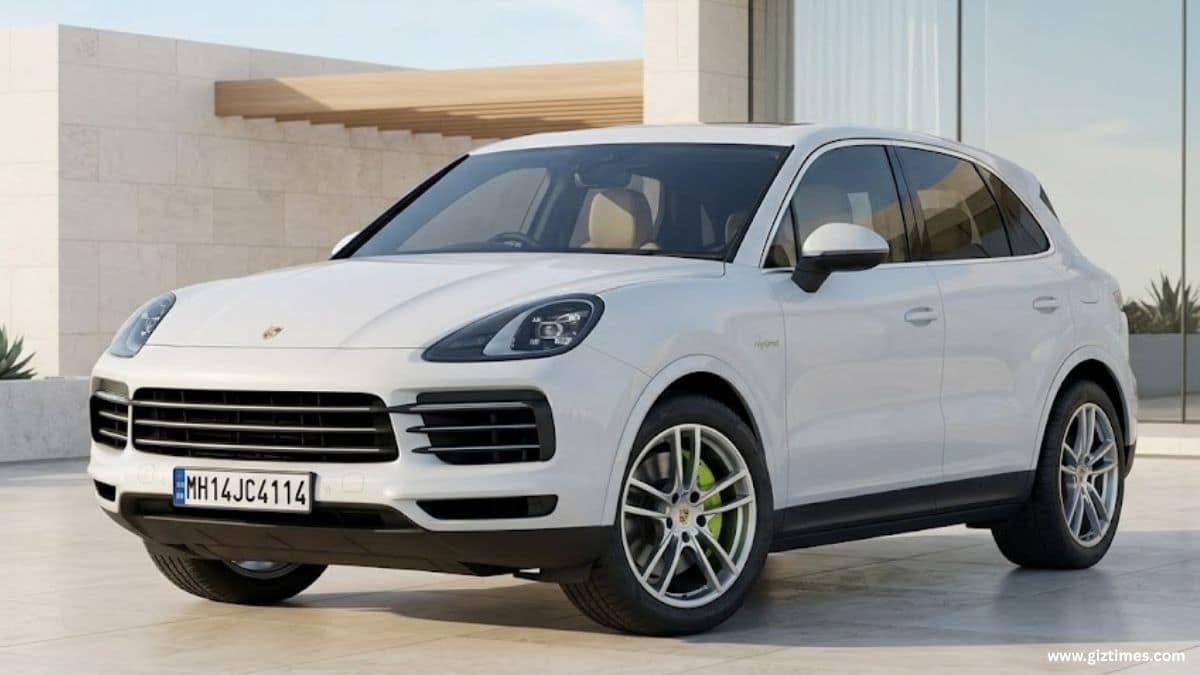
HYDERABAD, India (GizTimes) — Porsche has introduced the all-electric Cayenne, its third EV after the Taycan and Macan Electric. With this model, Porsche aims to show that even a large SUV can feel fast and fun to drive while remaining practical for daily use.
The new Cayenne Electric looks familiar but slightly updated. It keeps a traditional SUV shape rather than adopting a coupe-style design. It is very close in size to the regular petrol Cayenne, so it still feels like the same car, just in electric form.
Inside, the cabin feels modern and more digital. There are large screens for the driver and passenger, and most functions are controlled through the infotainment system. At the same time, Porsche has kept some physical buttons for things like temperature and volume, which makes it easier to use while driving.
Even with a big battery, the space inside is almost the same as before. The rear boot is smaller, but Porsche has added a small front storage space to make up for it.
Performance is where this SUV really stands out. The top version produces over 1,100 horsepower in boost mode and can go from 0 to 60 mph in about 2.4 seconds. That is supercar-level speed in a large SUV. Charging is also quick, with the battery going from 10 to 80 percent in around 16 minutes under the right conditions. The expected driving range is 350-387 miles.
Porsche has also worked on making the car easy and comfortable to drive. The acceleration is smooth, and the company has avoided one-pedal driving to give drivers better control. There is also an optional suspension system that helps keep the car stable, even during fast driving.
The Cayenne Electric can also handle daily needs, with strong towing capacity and enough space for regular use. Prices start at around $111,350, while the top version can go much higher depending on options.
Public reactions on Reddit are mixed but interesting. Some users feel German brands like BMW, Mercedes, and Porsche are doing well now with their electric cars, but they believe these companies had a weak start in the EV space, which affected their image.

Others disagreed with that view, saying these brands actually took a more careful approach instead of rushing, and that helped them build better products over time.
There were also some light and humorous reactions.
 A few users joked about the performance of these powerful EVs, saying it feels like something out of a movie, especially with how fast and capable they are. Overall, people seem to agree that these cars are impressive now, but there is still debate about whether the companies handled their early move into electric vehicles the right way.
 Overall, Porsche is trying to keep its driving feel alive in an electric SUV while also ensuring it works well in everyday life.
