

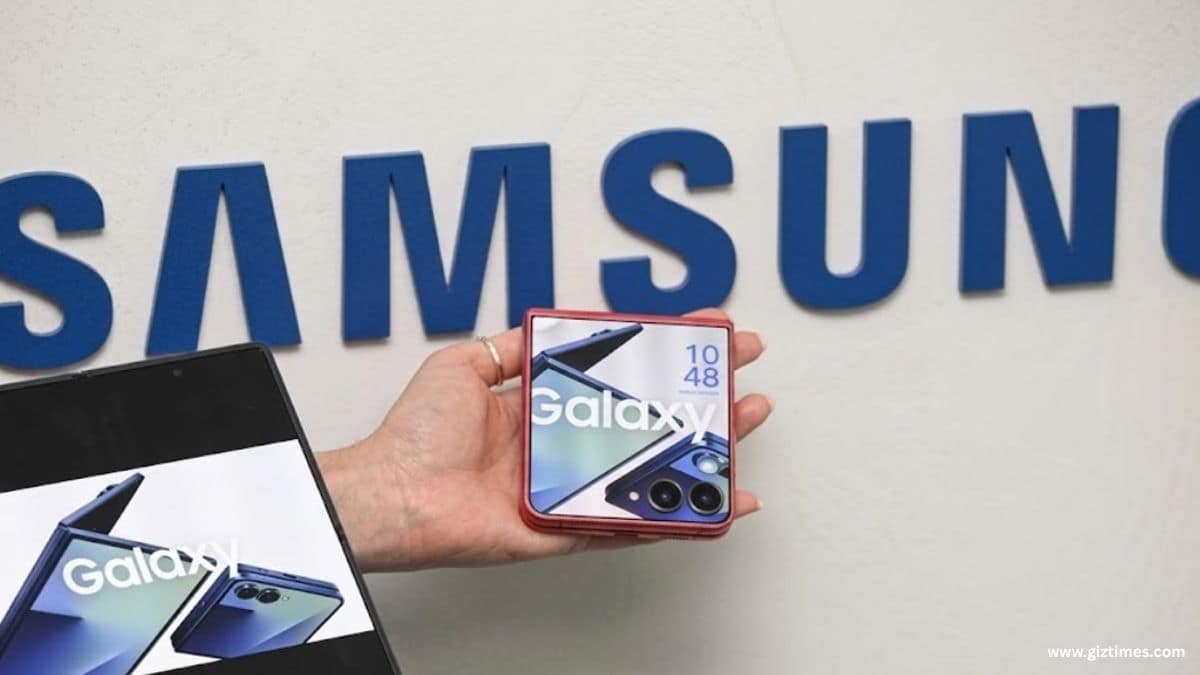
HYDERABAD, India (GizTimes) — Samsung has increased prices on select Galaxy Z Fold 7 and Z Flip 7 models in South Korea starting April 2026, targeting only the higher-storage variants while keeping base models untouched. The move is driven by rising memory chip and component costs that have been squeezing margins on high-spec foldables. What makes this notable is the surgical precision of the hike. Samsung is not raising the entry price for foldables, but is quietly shifting the cost burden onto buyers who want more storage.
The 512 GB Galaxy Z Flip 7 now sells for 1,738,000 KRW, up from 1,643,400 KRW, an increase of roughly 94,600 KRW (approximately $60). The 512 GB Galaxy Z Fold 7 has moved from 2,537,700 KRW to 2,632,300 KRW, a jump of about $71. The 1 TB Galaxy Z Fold 7 sees the steepest absolute rise, up 193,600 KRW, now priced at 3,127,300 KRW. The 256 GB and lower-tier models for both devices remain at their original prices. This is not an isolated adjustment; the Galaxy S25 Edge 512 GB has also been marked up in Korea as part of the same broader pricing revision across Samsung’s 2025–2026 flagship lineup.
The reason Samsung has kept base model prices flat matters here. It protects sales volume at the entry level while still recovering some margin from buyers who are already paying a premium for high-capacity storage. These are typically the buyers least likely to walk away over a $60–$70 increase. The focus isn’t on fully offsetting costs, it’s on achieving that without slapping a glaring price hike on entry-level foldable shoppers.
South Korea is consistently the first market where Samsung tests or applies pricing changes in response to component cost pressures. India and other major markets have historically followed, usually with a lag of weeks to a few months. If the same pattern holds, the 512 GB and 1 TB variants of the Fold 7 and Flip 7 could see price revisions in India, while Samsung may try to hold the 256 GB base price steady for longer to protect its volume share in a price-sensitive market. The exact scale of any India adjustment will hinge on import duties and how sustained this component cost spike turns out to be.
Reactions on X (Twitter) are skeptical and forward-looking rather than outraged.
One user pointed out that if memory prices remain this high, the days of affordable upgrades for both consumer devices and AI computing may be ending for now. They also highlighted that rising costs of HBM, DRAM, and storage won’t just affect phones and laptops, but are likely to push up prices for GPU servers as well. This is not just a consumer complaint; it reflects a genuine concern that elevated memory costs are structural, not temporary, and will ripple across hardware categories beyond smartphones.

A recent question about whether the Z Fold 8 could feature a wider front display shows that buyers are already weighing whether the next version will actually be worth the rising prices.

The skepticism around whether RAM prices are actually still rising, with one user saying “I thought RAM was going down,” points to a disconnect between Samsung’s stated reasoning and what consumers are observing in the broader chip market, a gap Samsung has not publicly addressed.

If Samsung successfully manages this tiered price increase without losing traction on higher-storage model sales, it could establish a template for absorbing component cost spikes across its foldable lineup with minimal volume impact but if buyers in India and other markets push back or shift toward base-model purchases, Samsung risks narrowing its own margins further on the variants that were supposed to offset the cost pressure in the first place.
