

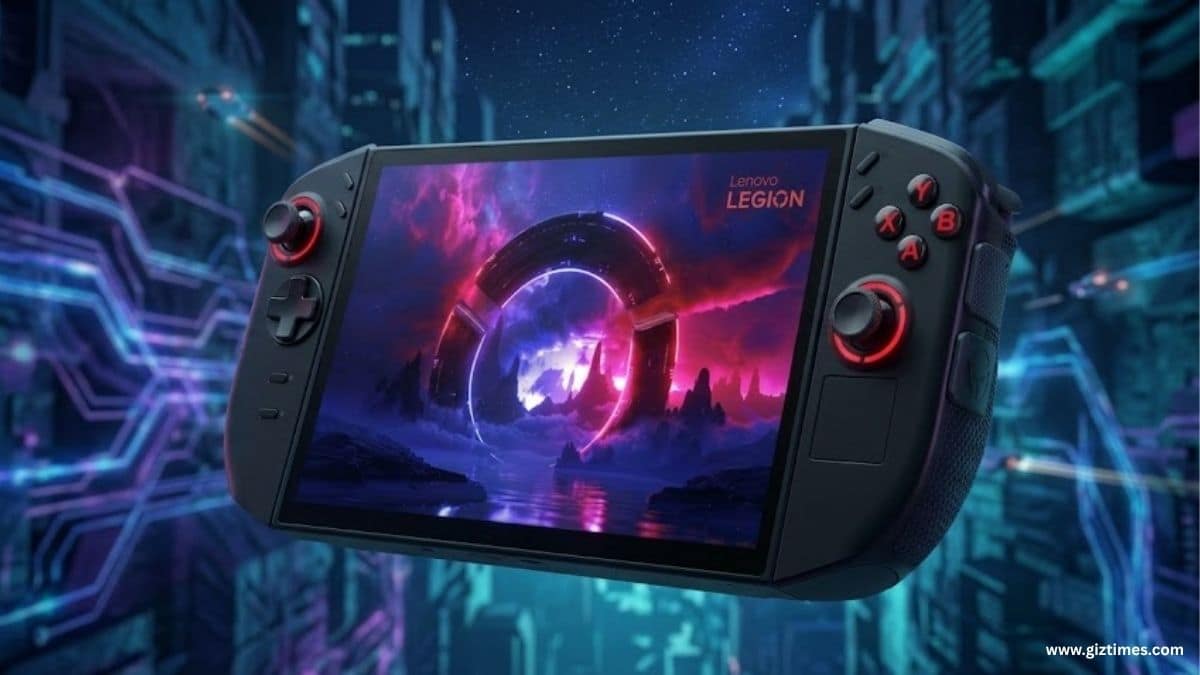
HYDERABAD, India (GizTimes) —Lenovo has raised the price of its Legion Go 2 just a few months after launch, pushing it into a much higher price range and catching attention for how big the jump is. What makes this more striking isn’t just the size of the increase, but how quickly it came in a market where handheld gaming prices are already highly competitive.”
The base model of the Legion Go 2, powered by AMD Ryzen Z2 with 16GB RAM, now costs $1,499.99, up from $1,099.99, an increase of around 36%. The higher-end version, provided with the Ryzen Z2 Extreme and 32GB RAM, has seen an even sharper jump, rising from $1,349.99 to $1,999.99, or roughly 48%. Lenovo hasn’t provided an official explanation, but the changes are widely linked to ongoing global shortages of GPU and memory components.
The price changes were first noticed on the Best Buy website by Insider Gaming before appearing on Lenovo’s official storefront, signaling a coordinated adjustment rather than a regional fluctuation. At $1,999, the top-tier Legion Go 2 now sits firmly in the ultra-premium segment, significantly above most handheld gaming competitors.
This repositioning places the device far beyond rivals like the Steam Deck OLED from Valve and the ASUS ROG Ally X from ASUS, both of which remain substantially cheaper.
This increase isn’t happening in isolation it reflects a broader pattern across the gaming industry. Sony raised prices for the PlayStation 5 and PS5 Pro in March 2026, while Microsoft had already adjusted Xbox pricing in late 2025.
The increase aligns with a broader pattern across the gaming industry. Sony raised prices of the PlayStation 5 and PS5 Pro in March 2026, while Microsoft had already revised Xbox pricing in late 2025. Even supply constraints have affected availability, with Valve’s Steam Deck OLED recently going out of stock in the U.S. due to the same memory shortages driving up costs.
The situation matters because it signals a shift in how hardware makers are responding to supply chain pressure. Rather than absorbing costs or delaying production, companies are increasingly passing them directly to consumers. For handheld gaming in particular, where price sensitivity has been key to growth, such increases could slow adoption and reshape demand toward more affordable alternatives or traditional consoles.
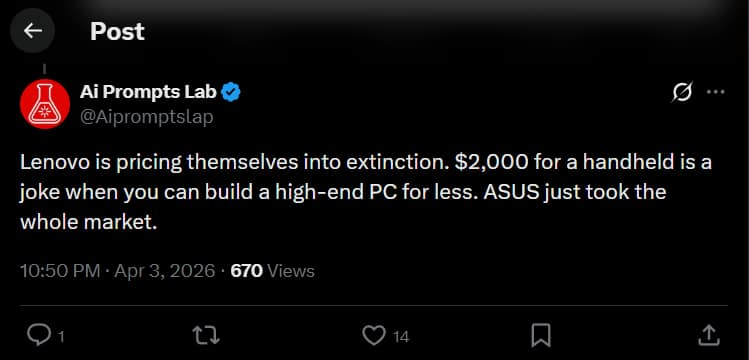
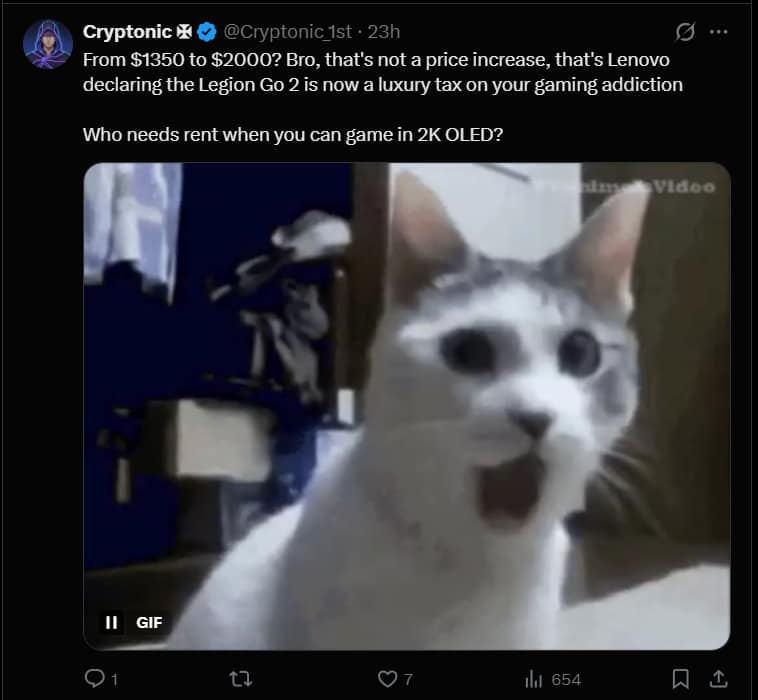
Public reaction on X (Twitter) has been largely negative, with many users criticizing the scale of the increase.
One widely shared comment described the new pricing as a luxury tax on your gaming addiction, while others argued that the device now costs as much as a full gaming PC or suggested opting for cheaper alternatives like a console. Another reaction stated that you can get 2 proper PCs for that price, reflecting disbelief at the scale of the increase. These responses collectively point to a broader trend: consumers are increasingly resistant to aggressive price hikes in a category that grew by offering relatively accessible, portable gaming experiences.
 The upcoming holiday sales season will likely determine whether Lenovo’s premium strategy for the Legion Go 2 succeeds or fails.
