

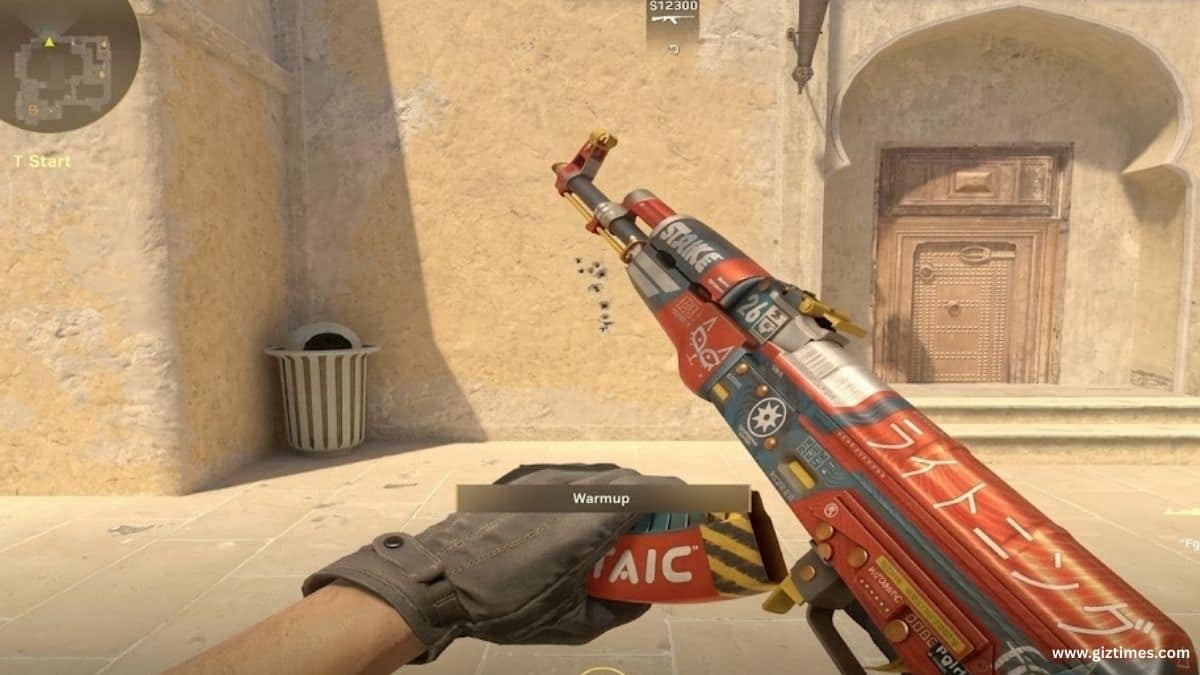
A fundamental change to Counter-Strike 2’s reloading system has been introduced by Valve, which could significantly alter how gunfights, ammo management, and round strategy are approached by players. The update, part of the new “Guns, Guides, and Games” patch, makes reloading a high-stakes decision rather than a risk-free habit, by which even veteran players are forced to rethink muscle memory built over years of Counter-Strike.
https://x.com/CS2News_EN/status/2034401733066268838
The core tweak is simple but far-reaching: the magazine that is dropped upon reloading now hits the ground with all remaining bullets still inside it, instead of those bullets being added back into the reserve ammo pool. In practical terms, a half-magazine’s worth of bullets is lost for good if reloading occurs with half a mag left.
Before, players could safely refill their guns between fights. They reloaded after every battle or even a few shots, with no bullets wasted. Now, every early reload takes away from your total bullets for the round.
Valve explained that it wants reloading to carry “higher stakes,” transforming it from a habitual reset into a crucial tactical choice.
Alongside this, each weapon now has a finite number of full magazines rather than a large, amorphous ammo pool, and different guns have different reserve counts to promote distinct playstyles.
To support the new system, Valve has rebalanced ammunition across several weapons, reducing reserves to emphasize precision and discipline. One of the clearest examples is the Glock: its total ammo has been reduced from 140 rounds to 80. That means players not only start with fewer bullets overall, but they can also chew through their supply much faster if they reload carelessly.
Valve noted that most weapons will have the equivalent of roughly three full magazines in reserve, though this varies. Some guns will have fewer to reward efficient, accurate shooting, while others will have more to encourage high-volume fire, such as spamming through smokes or walls. Players are being explicitly warned to “keep an eye” on their remaining magazines, since that count now matters as much as armor, utility, or positioning.
This structured magazine system reinforces the idea that every bullet is a resource. Weapons designed for spam become clearer risk–reward tools, while those with smaller reserves punish trigger-happy or unfocused play.
The impact of this change is magnified by Counter-Strike 2’s fundamental identity as a tactical shooter with extremely fast time-to-kill. A single well-placed headshot can instantly kill an enemy, even through helmets with many weapons. Traditionally, this reality pushed players to prioritize entering every engagement with a full magazine; running out of bullets mid-fight is often fatal.
In the old system, players reloaded freely between fights or while moving on the map. They topped off their magazines during any quiet moment. There was no real penalty for reloading after every small battle or quick burst. That ingrained habit is now directly punished: if players continue to reload reflexively after firing only a few bullets, they risk running completely dry later in the round.
The update also affects common tactics such as blind spamming into smokes or through common wallbang spots. Players often dump most of their magazines into foggy spots, hoping to hit enemies moving around. Now, with new rules, you must think about bullets left in the mag and your total supply. “Spray and pray” now costs more than before.
Early community responses show a split between those who welcome the increased emphasis on ammo awareness and those who see the change as unnecessary. Some players have compared the new system to older versions of Counter-Strike, such as 1.6, where tracking ammunition felt more deliberate and punishing. Commentator Webster on X praised the update as a “W change,” arguing that it revitalizes the need to consciously track bullets and mags.
On the other side, some players are puzzled about the motivation behind the overhaul. Content creator MissiaCS voiced appreciation for the developers’ willingness to experiment but questioned why this particular feature was introduced when there was no widespread demand for a new ammo system. This camp worries that such a deep mechanical shift might disrupt a formula that many felt already worked well.
The announcement received critical reactions from many X (Twitter) users, especially from long-time players.
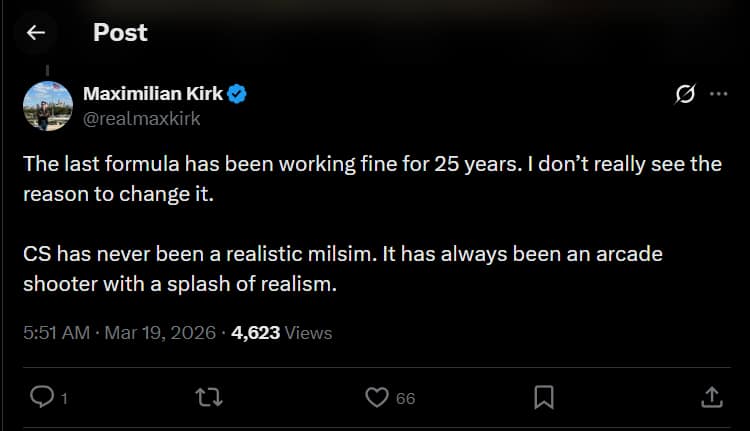
One user argued that the game’s formula has worked well for over 25 years and does not need major changes, emphasizing that it has always been more of a simple, arcade-style shooter rather than a highly realistic simulation.
Another player said the same thing. The game is popular because it’s smooth and simple to play. But devs are adding tricky stuff no one wanted.

Meanwhile, a third player joked sarcastically about a “bullet demo race.” It hints at the changes adding pointless competition or mess, not better core play.

Players’ reactions are still changing as pros and casuals test it in real games. Changes to buys, money handling, and end-round plays will take time to show up fully.
By directly attacking one of the most ingrained habits in Counter-Strike, constant reloading, Valve has taken a bold step in reshaping Counter-Strike 2’s meta. The new system forces players to balance the safety of entering fights with a full mag against the long-term risk of running out of ammo entirely. It reshapes how players spam through utility, how support roles manage fire, and how IGLs think about round pacing.
Whether this reloading overhaul ultimately improves the game or alienates parts of the player base is still uncertain. For now, one thing is clear: anyone used to reflexively hitting reload after every few shots will have to break that habit fast or face the brutal consequences of hearing a click instead of a shot in the next crucial duel.
