

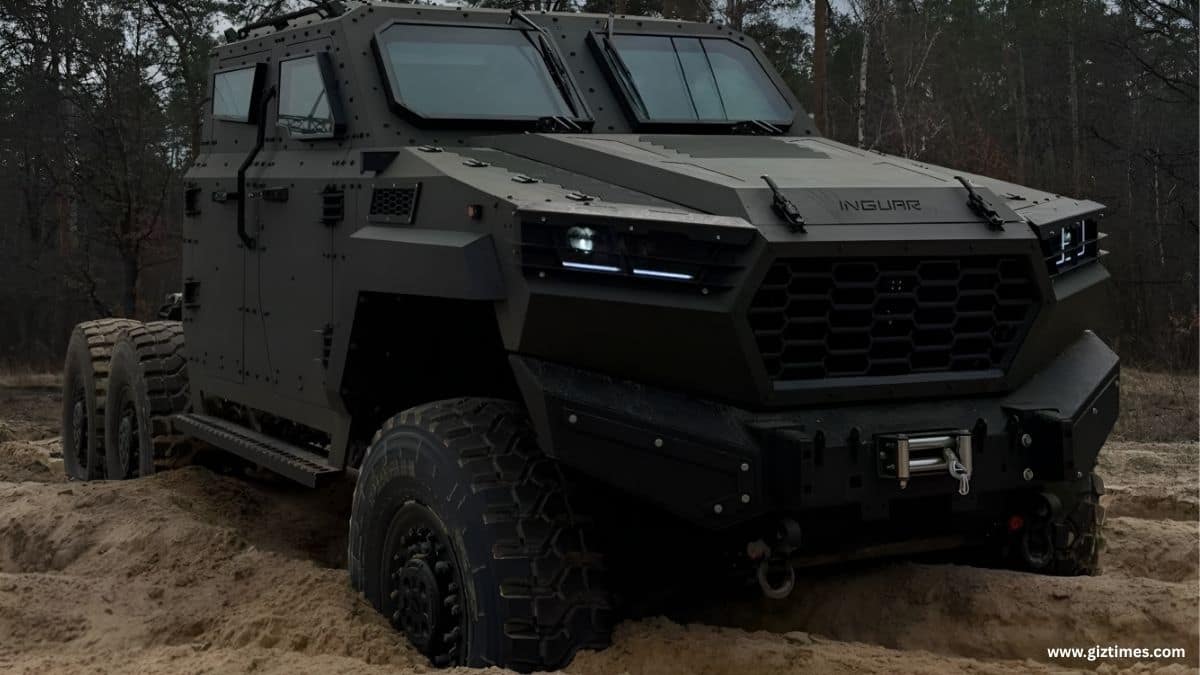
HYDERABAD, India (GizTimes) — Ukrainian defense manufacturer Inguar Defense has introduced a new three-axle armored vehicle, the Inguar-4, aimed at expanding its military vehicle lineup. The vehicle is built on a custom, locally developed chassis and is designed for multiple battlefield roles. What makes it notable is its improved load capacity and mobility compared to earlier models, along with a strong focus on domestic manufacturing.
The Inguar-4 is based on a longer version of the earlier Inguar-3 platform but adds a third axle with independent suspension. This setup is meant to handle heavier loads while maintaining off-road performance. According to the company, the vehicle can be adapted for different uses, including as a heavy weapons carrier, a towing unit, or an armored recovery vehicle.
One of its key roles is battlefield recovery. Some units have already been built as armored recovery vehicles, equipped with hydraulic systems to tow or evacuate damaged military equipment. The vehicle can handle machines weighing up to 15 tons, including tracked carriers such as the M113 and other armored vehicles used in current operations.
A major focus for Inguar is local production. Most of the vehicle’s chassis components are made in Ukraine, including the frame, suspension, rubber parts, and hydraulic systems. The only major component not yet produced locally is the gearbox, which requires advanced and costly manufacturing tools. The company says future versions are expected to include a locally made gearbox as well.
The Inguar-4 is expected to cost around $500,000 in its base form, slightly higher than the earlier Inguar-3, which is priced at about $420,000. The final cost can increase depending on additional equipment such as recovery systems or weapon mounts.
This development matters because it shows a continued push toward self-reliance in defense manufacturing. By producing most parts locally, Ukraine can reduce dependence on foreign suppliers, which is critical during the ongoing conflict. It also allows faster repairs, upgrades, and adaptation based on real battlefield needs.
Compared to similar NATO vehicles, the Inguar-4 aims to offer a flexible, cost-effective alternative, especially for recovery and support roles. While it may not match every advanced feature of larger Western platforms, its focus on practicality and local production gives it a distinct advantage.
Public reaction online has been largely positive, with many users highlighting the country’s ability to innovate under pressure. One comment noted, “The innovation tendencies in the Ukrainian people are very strong,” reflecting admiration for the development. This response suggests a broader trend in which people see domestic defense projects not just as military tools but also as signs of resilience and technical advancement during difficult times.


The upcoming real-world deployment and testing will likely determine whether the Inguar-4 can meet expectations in active combat conditions.
