

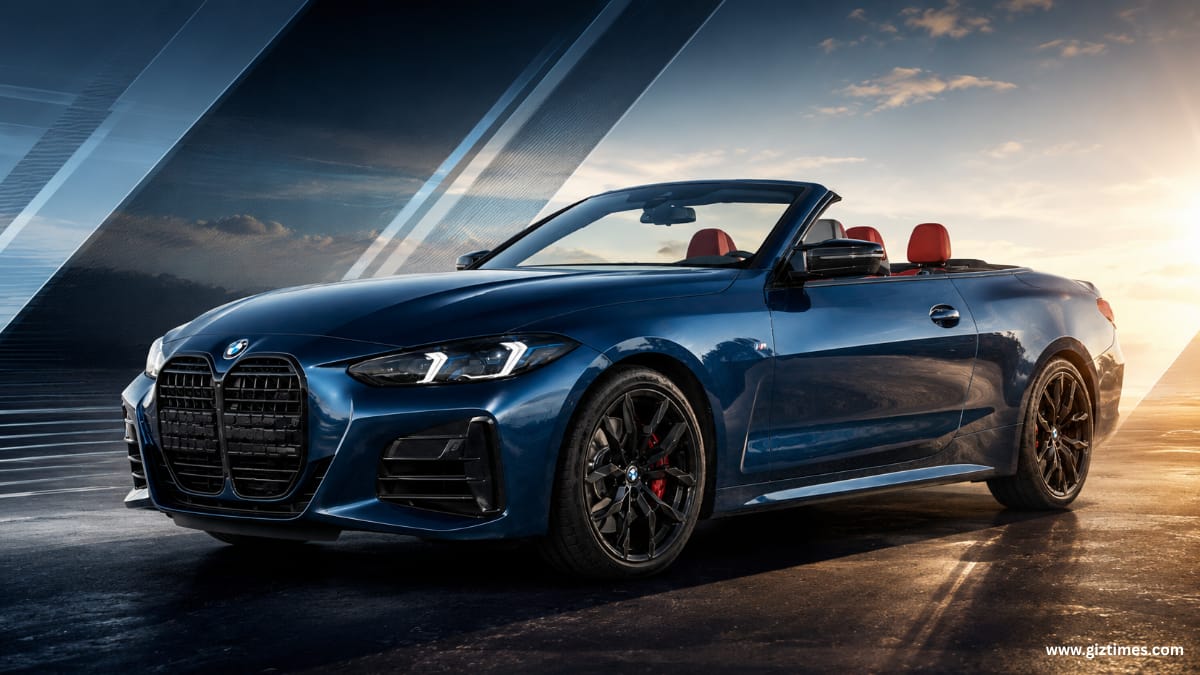
HYDERABAD, India (GizTimes) — Performance convertibles often force buyers to choose between everyday usability and sports-car excitement. The BMW M440i enters this space with a different approach. Rather than chasing a pure sports-car identity, BMW combines strong performance, advanced technology, all-weather capability, and practical usability into a single package.
The comparison becomes particularly interesting when set against the Porsche 911 Carrera Cabriolet, a vehicle that has long been considered a benchmark for open-top sports cars. Both deliver speed and driver engagement, but they approach the problem from very different engineering philosophies.
Why This Vehicle Exists
BMW’s performance strategy with the M440i is centered on versatility. The broader BMW performance-convertible formula emphasizes delivering high levels of acceleration, daily comfort, and technology without requiring owners to sacrifice practicality.
This philosophy is visible throughout BMW’s engineering findings. Advanced turbocharged power delivery, sophisticated chassis electronics, adaptive suspension systems, and all-wheel-drive capability are designed to make performance more accessible in real-world conditions, not just on ideal roads or race tracks.
A key advantage of BMW’s approach is usability. The platform offers seating for four occupants and maintains the comfort expected from a premium grand tourer while still delivering sports-car levels of performance. That combination allows the vehicle to serve as both a weekend performance machine and a daily driver.
The underlying message is clear: BMW is not simply building a convertible. It is building a performance car that remains functional when the driving excitement ends.
Framework Integration: Auto Meets Tech and Zonal Thinking
The BMW M440i’s strongest advantage lies in how technology is integrated into the driving experience rather than added as a collection of standalone features.
BMW’s digital ecosystem includes the BMW Curved Display, Operating System 8.5, Head-Up Display, Digital Key, Intelligent Personal Assistant, and advanced driver-assistance technologies. These systems create a software-driven ownership experience that extends beyond performance figures.
On the performance side, technologies such as M xDrive, Active M Differential, Adaptive M Suspension, variable sport steering, and advanced traction management continuously adjust vehicle behavior based on driving conditions.
The non-obvious insight is that BMW’s technology stack is serving two different customer groups simultaneously. Enthusiasts benefit from chassis and drivetrain intelligence, while daily users benefit from digital convenience features. Porsche’s updates primarily modernize the sports-car experience, whereas BMW’s architecture attempts to blend sports-car performance with luxury-car expectations.
This reflects a broader shift toward software-defined vehicles, where the value proposition increasingly depends on how well performance and digital systems communicate.
Comparison
The BMW and Porsche target similar buyers, yet their priorities differ significantly. Porsche focuses on preserving the traditional 911 driving character through its rear-engine layout and rear-wheel-drive architecture. BMW focuses on expanding the range of situations in which performance can be enjoyed.
| Category | BMW M440i / BMW Performance Convertible Platform | Porsche 911 Carrera Cabriolet |
|---|---|---|
| Engine Layout | Front-mounted turbocharged inline-six architecture | Rear-mounted 3.0-liter twin-turbo flat-six |
| Power Output | Up to 530 hp (BMW performance convertible platform data provided) | 388 hp |
| Transmission | 8-speed automatic transmission | 8-speed PDK dual-clutch transmission |
| Drivetrain | M xDrive all-wheel drive | Rear-wheel drive |
| 0-100 km/h | 3.7 seconds | Approx. 3.9–4.1 seconds (0-60 mph estimate) |
| Top Speed | 280 km/h with M Driver’s Package | Not provided |
| Differential | Active M Differential | Not specified |
| Suspension | Adaptive M Suspension | PASM adaptive suspension |
| Seating | Four occupants | Not specified as four-seat practical focus |
| Infotainment | BMW Curved Display, OS 8.5, Digital Key, Intelligent Personal Assistant | Digital cluster, touchscreen infotainment, Connected Porsche Services |
| Positioning | Performance convertible with everyday practicality | Traditional sports-car convertible |
Based on the provided data, BMW’s advantages are concentrated in power output, all-wheel-drive traction, passenger practicality, and digital integration. Porsche’s strengths remain tied to its iconic rear-engine configuration and driver-focused sports-car heritage.
Public Reaction Analysis
The reactions reveal something important about today’s performance-car market.
The first response praises the vehicle’s emotional experience rather than its specification sheet. This signifies that buyers increasingly evaluate performance cars through the quality of the driving experience rather than raw horsepower figures.

The second reaction views the vehicle as a potential alternative for a Nissan 350Z. That observation highlights how modern performance convertibles are attracting buyers who traditionally purchased dedicated sports cars. Consumers seem willing to accept slightly larger sizes and greater luxury content if they acquire comparable excitement with significantly greater comfort and usability.

Together, these reactions indicate that the market is shifting toward vehicles that balance emotion and practicality rather than prioritizing one over the other.
Why It Matters
The BMW M440i represents a broader industry trend in which performance vehicles are becoming more technologically sophisticated and more versatile.
Classic sports cars historically demanded compromises in comfort, practicality, and usability. Modern performance convertibles increasingly use software, adaptive chassis systems, and digital ecosystems to reduce those compromises.
This trend aligns with the industry’s move toward software-defined vehicles, where the interaction between hardware and software becomes as important as engine output. Vehicles that successfully combine performance, connectivity, and everyday usability may attract a larger audience than pure sports cars.
BMW’s approach suggests that future performance cars will be judged not only by lap times or acceleration figures but also by how seamlessly they blend into daily life.
Final Takeaways
BMW’s decision to utilize a lightweight fabric roof follows a wider industry movement away from retractable hardtops. The weight reduction benefits handling, efficiency, and packaging while maintaining convertible functionality.
Another interesting observation is that BMW’s all-wheel-drive strategy and four-seat practicality place it in a niche that relatively few performance convertibles occupy. Many rivals either emphasize luxury touring or uncompromising sports-car dynamics, leaving BMW positioned between both worlds.
Much of the discussion now centers on balancing high-performance capability with everyday usability, which could define the future success of premium performance convertibles.
