

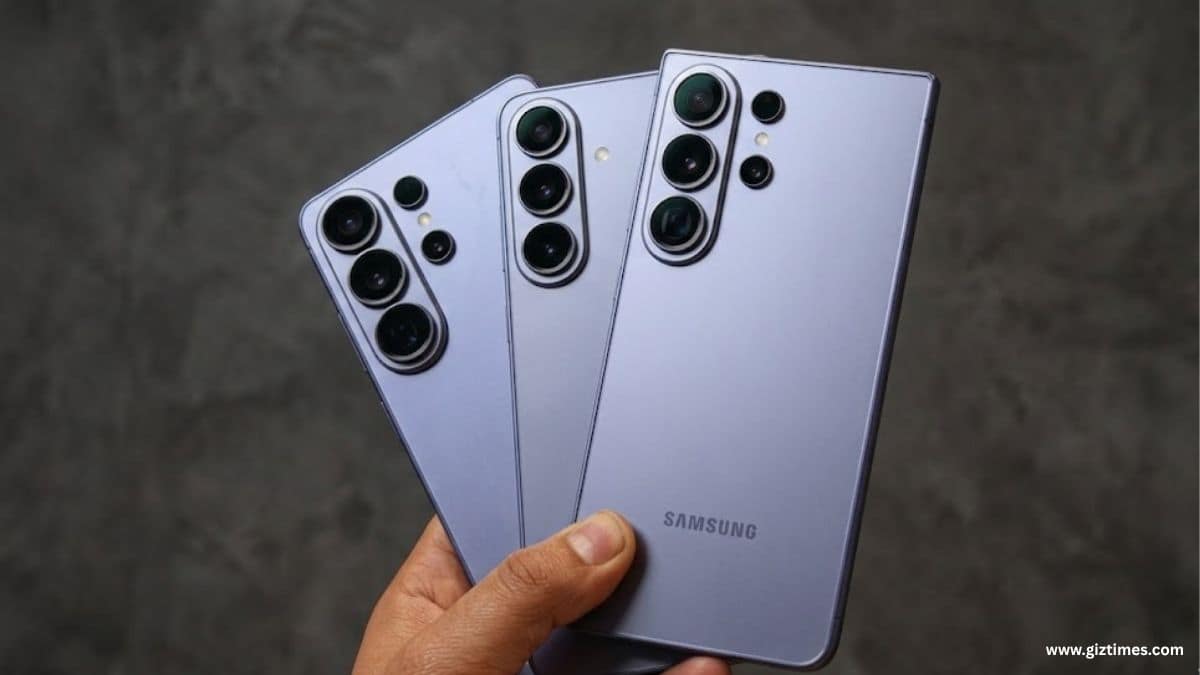
HYDERABAD, India (GizTimes) —Samsung is reportedly planning a major change to its flagship lineup for 2027, with new details pointing to a fourth model, the Galaxy S27 Pro, joining the standard, Plus, and Ultra variants. The move stands out because the Pro model is expected to deliver Ultra-level specifications while omitting the S Pen, signaling a shift in how Samsung defines its top-tier devices.
According to the report, the Galaxy S27 series will expand to four models: Galaxy S27, S27 Plus, S27 Pro, and S27 Ultra. The Pro model is expected to share several high-end features with the Ultra, including a 200-megapixel main camera and a display designed with privacy in mind. However, it won’t include the S Pen, a feature that has long been tied to Samsung’s top-tier models. Removing the stylus could allow Samsung to redesign the device with a more compact form factor, potentially increase battery capacity, or add support for Qi2 magnetic wireless charging.
The pricing strategy appears central to this move. The S27 Pro is expected to sit between the Plus and Ultra models, offering near-Ultra performance at a slightly lower price point. This positioning could appeal to users who want flagship-level hardware but don’t care much about a stylus, allowing Samsung to expand its premium lineup without affecting demand for the Ultra.
The decision also reflects a broader strategic shift. By introducing a Pro model without the S Pen, Samsung can test demand for high-end devices that prioritize performance and design over niche features. At the same time, the Ultra model will continue to serve loyal users who rely on the stylus. Reports also indicate that Samsung had previously explored alternative lineup changes, such as replacing the Plus variant with a thinner Edge model, but pivoted after lukewarm responses.
The S Pen itself appears to be evolving within Samsung’s ecosystem. Recent changes, such as reduced functionality in newer Ultra models, suggest the company is reconsidering how essential the stylus is for future flagship devices. The S27 Pro could be a key step in separating power-user hardware from stylus-driven experiences.
This approach closely mirrors the strategy used by Apple, which differentiates its lineup with standard, Plus, Pro, and Pro Max models to target multiple price and feature segments. By adopting a similar structure, Samsung seems to be aiming for clearer positioning across its premium lineup, giving buyers more straightforward choices based on features rather than just branding.
The development remains in an early stage, and specific details such as display sizes and final hardware compositions have not yet been confirmed. The information originates from the South Korean publication ET News, indicating that plans could still evolve before launch.
This shift is significant because it signals an evolution in what consumers value at the flagship level. With hardware advancements reaching a point of decreasing returns, competitive differentiation is now driven less by mere specifications and more by how brands curate features and position pricing to match specific user preferences. By separating the S Pen from its highest-end hardware, Samsung could make its premium devices more accessible and relevant to a broader audience while preserving a niche for stylus enthusiasts.
Public reaction on X (Twitter) has been mixed, with much of the discussion focusing on hardware expectations and design preferences.
One user asked, Are the cameras going to be as good as the Chinese flagship models? reflecting growing pressure on Samsung to match rapid advancements in mobile photography from competing brands. The comment signals a broader shift where buyers increasingly evaluate flagship phones based on camera performance rather than brand loyalty alone.

A separate segment of users preferred a more compact 6.3-inch model over an expanded display, reinforcing that interest in smaller, high-end smartphones hasn’t faded even as the market skews larger. Taken together, these reactions indicate a shift in buyer priorities away from brand hierarchy and toward tangible qualities like imaging performance and device handling.

The upcoming Galaxy S27 launch will likely determine whether Samsung’s four-model flagship strategy succeeds or fails.
