

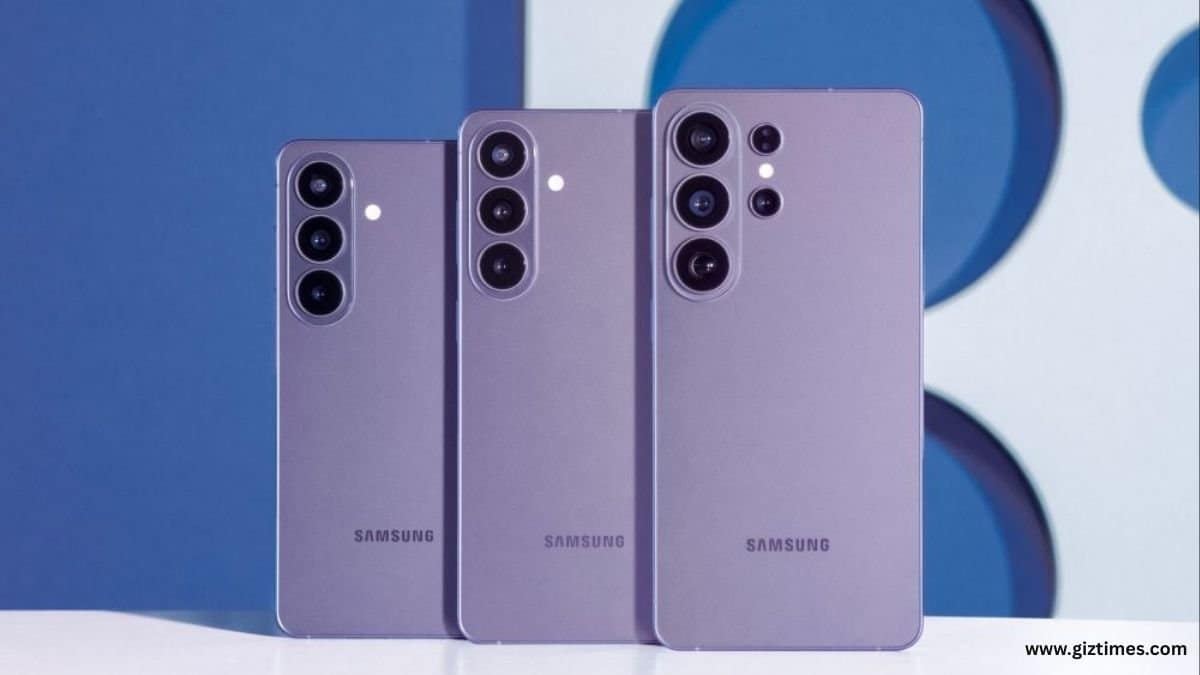
Samsung has rolled out satellite communication to Galaxy smartphones around the world, including the fresh Galaxy S26 series. This means your phone can now send texts, share data, and call for help even without cell towers nearby, perfect for remote spots or emergencies. The company partnered with major phone networks in the US, Europe, and Japan to make it happen.
https://x.com/Samsung/status/2027288696991764901
As AI tools like smart assistants and gaming apps become part of everyday life, having a stable internet connection is more important than ever. Samsung began adding this feature in 2025 to its high-end Galaxy S phones released after the S21 and S22 models, and also to some budget-friendly A-series phones.
Key benefits include fast emergency alerts like America’s T911 and Europe’s eSOS, which help people quickly contact emergency services. It also supports basic text messages and sharing small amounts of data. In Japan, there are special alerts for earthquakes and tsunamis to keep people safe. These features are introduced step by step in different countries, depending on local network systems and government rules. Many services use satellites, such as Starlink, to provide a strong and reliable connection.
Diving into the US side, T-Mobile joined forces with Starlink to bring T911 emergency calls, texts, and data services starting in 2025. This includes newer Galaxy flagship phones and A-series models released after the S21. Verizon now offers eSOS emergency alerts and texting on all S25 series flagship phones and newer models. AT&T is also getting ready to start this service soon, giving more choices to users in the U.S.
Because of these partnerships, whether you are hiking in the mountains or dealing with a storm, your Galaxy phone can still connect when it really matters.
Europe is also moving quickly to add satellite service. Virgin Media O2 has started enabling satellite support on some Galaxy phones, giving users a strong backup connection. In Spain, MasOrange will begin testing the service together next month in March to prepare for a bigger launch. Vodafone is also working to expand this technology to more phone models across the region. This means people traveling from the UK to the Mediterranean can stay connected, even in places with no regular network signal.
Japan has been ahead of the curve since 2025, thanks to KDDI. They’ve enabled texting, data functions, and the Earthquake and Tsunami Warning System ETWS on Galaxy S22 and later flagships, as well as A-series phones. Looking ahead to 2026, giants like SoftBank, docomo, and Rakuten Mobile will roll it out on even more flagship and A models. It’s a smart move in a country prone to natural disasters, keeping people informed and connected.
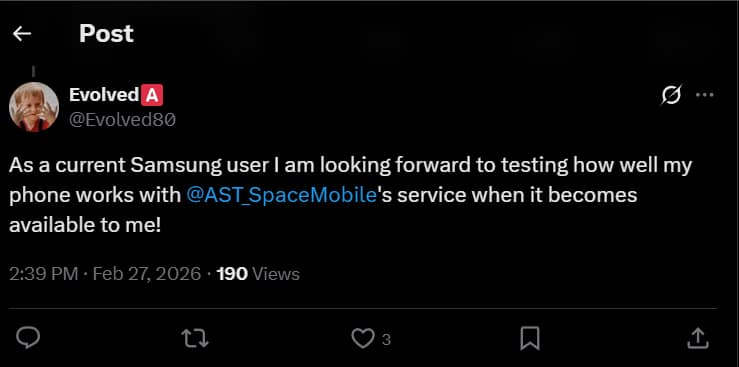
Public reactions on (X) Twitter show interest, curiosity, and feature requests related to Samsung.
One user, who already uses a Samsung phone, said they are excited to test how well it will work with AST SpaceMobile’s service once it becomes available, showing anticipation for improved connectivity.
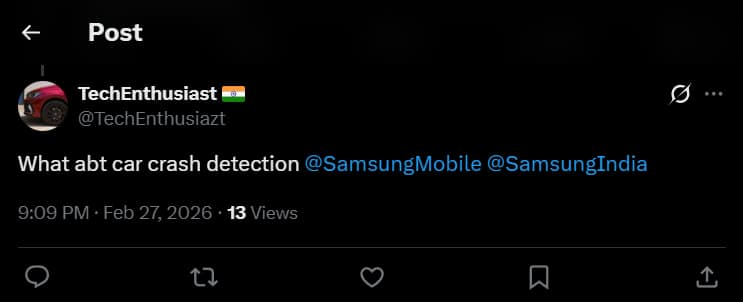
Another user asked about car crash detection, tagging Samsung Mobile and Samsung India, which suggests concern about safety features and whether they will be included.
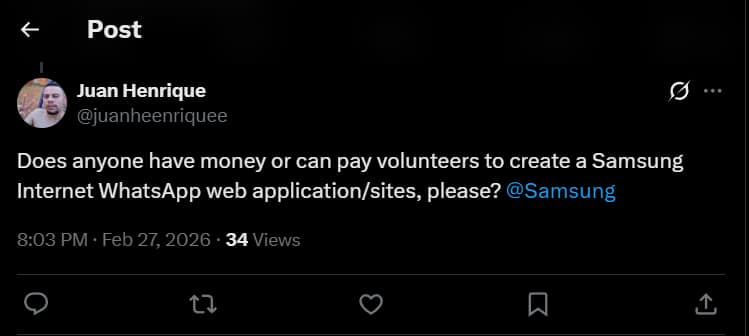
A third user requested support for a Samsung Internet version of WhatsApp Web, asking if anyone could fund volunteers to create it, reflecting demand for better app compatibility within Samsung’s ecosystem.
Samsung’s President and tech head, Won-Joon Choi, highlighted the company’s long history in wireless tech. He said Samsung wants to become a leader by working with partners around the world, so Galaxy users can have reliable service, especially in important moments. It’s not only about emergency situations now it’s about creating a smooth and connected world where AI works properly without network problems.
Since starting this service in 2025, Samsung has increased the number of supported phones and improved its system in the background, making satellite connection a regular, everyday feature.
Imagine playing online games while camping far away from cities, sending photos during a road trip when there’s no signal, or texting your family during a power cut. Samsung wants to expand this service by adding more mobile networks and supporting more Galaxy phones, so more people can use it.
In simple terms, this global plan turns your phone into a safety tool. It combines advanced satellite technology with smart AI features to help people stay safe and connected anywhere.
Read More:
- Google Launches Nano Banana 2: Bringing Pro-Level Image Generation and Editing Quality at Lightning-Fast Flash Speeds to Gemini App, Search, and Developer Tools Starting Today
- Resident Evil Requiem Epic Win on All Consoles, ABSOLUTE BEAST on PS5 Pro
- Marvel’s Wolverine Set to Release on September 15, 2026, See What Fans are Expecting
