

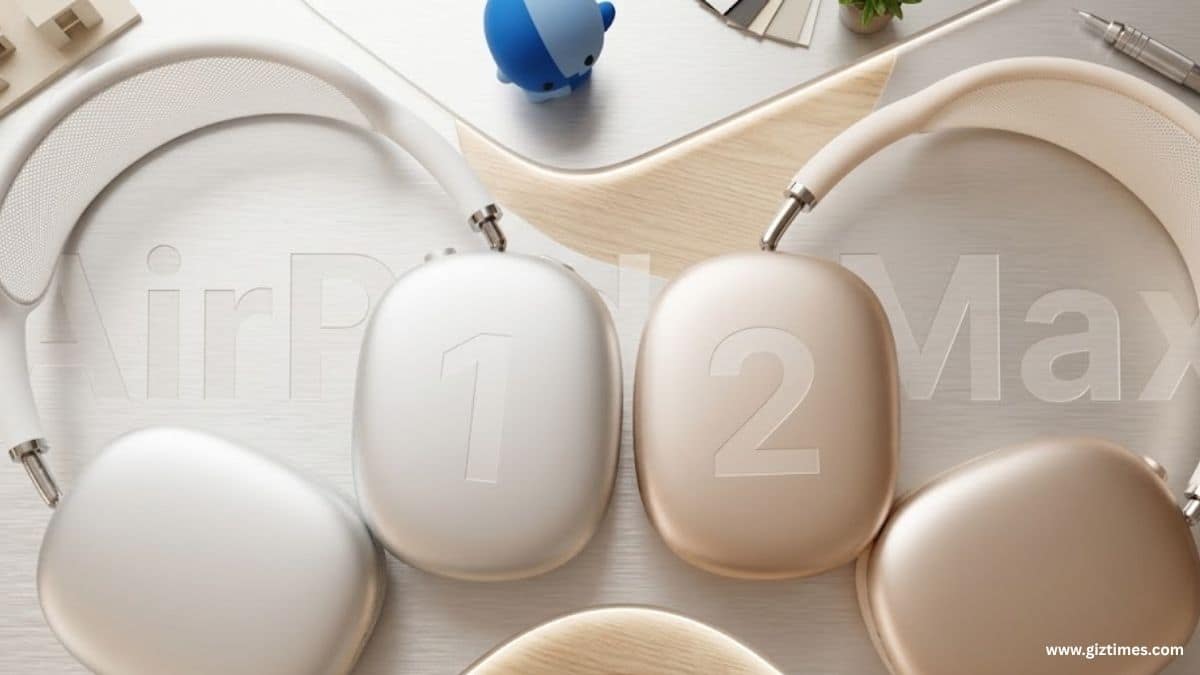
HYDERABAD, India (GizTimes) —With the arrival of AirPods Max 2, Apple continues with ecosystem-centric thinking, finally upgrading the headphones to the H2 chip along with some other improvements. While on paper this would seem like a move to equalize the AirPods family, in practice, it creates a clear opposition between two approaches to premium audio headphones.
In this analysis, we will compare the AirPods Max 2 with the Sony WH-1000XM6 to identify why one of these headphones holds greater value than the other in the long run.
Why This Product Exists
First, what makes the AirPods Max 2 interesting? For the most part, it remains pretty much the same headphone. It does not change the overall look or design. It has the same weight. There is the same battery life. And while it does bring changes under the hood, the biggest update comes in the form of the H2 chip and new amplifier.
Why would Apple do such a thing? Well, because there was no point in going too far ahead. With the new chip in place, the headphones finally have the opportunity to integrate new features within Apple’s ecosystem and continue improving. However, this update cannot be considered revolutionary, and it is unlikely that Apple would add anything major to the AirPods Max line anytime soon.
On the other hand, we get the Sony WH-1000XM6, which relies on a completely different concept. In this case, Sony goes with a fundamentally stronger processing unit that is tailored specifically towards headphones. Moreover, this new generation of the QN3 processor works 7× faster compared to the previous iteration, which allows it to handle various tasks.
As you might have noticed, this creates quite a strong divide between the two approaches. While Apple continues working on improving its headphones from an integration perspective, Sony focuses on enhancing their behavior in the real world. Both approaches have something to offer, but only one is able to deliver long-term value.
Processor Longevity and Update Roadmap
When comparing two approaches, the first area worth analyzing is processor longevity.
For AirPods Max 2, the longevity will depend greatly on how Apple manages the update roadmaps. The fact is, the H2 chip was introduced with multiple Apple products, which means that it is already well tested in many situations.
However, since it has already been incorporated across the entire line, the AirPods Max 2 will become outdated with the next update of a higher-tier product. It is highly unlikely that the company will continue extending the functionality of this chip, meaning that there is going to be some sort of replacement, like the H3, in the near future.
On the other hand, the QN3 processor is completely new. It was created specifically for this type of headphone and, therefore, will not be used anywhere else. As such, Sony will have an easier task of making new adjustments. With a processor that has 7× more power, the company has the freedom to introduce new features and functionalities.
In addition, firmware and software updates will enhance an already powerful system rather than try to expand its capabilities further.
Here is the non-obvious insight: Processor longevity is dependent on whether the chip is updated for the entire line or not. In Apple’s case, processor longevity is heavily reliant on the company’s update roadmap. On the other hand, processor longevity in Sony’s headphones depends greatly on future hardware upgrades.
Comparison
At a glance, both headphones operate at a similar tier, but their value distribution is very different.
| Feature | AirPods Max 2 | Sony WH-1000XM6 |
|---|---|---|
| Price | $549 | $449 |
| Processor | H2 chip | QN3 processor (7× faster than previous gen) |
| Battery Life | 20 hours | 30 hours |
| Weight | 386.2 g | 254 g |
| ANC | Improved, ~1.5× better than Max | Advanced real-time adaptive ANC |
| Audio Codec Support | AAC, wired lossless (24-bit/48kHz) | LDAC, LC3, high-res wireless |
| Voice Calling | Strong, optimized for FaceTime | Best-in-class with 12-mic system |
| Ecosystem Features | Deep Apple integration | App-based customization, cross-platform |
The table clearly shows the core trade-off. Apple clusters value around ecosystem features. Sony distributes value across hardware, battery, and flexibility.
Public Reaction Analysis
Based on recent public reactions, it appears that there is a split perception in how AirPods Max 2 sounds compared to its predecessor.
On one hand, some users find them too bass-heavy. On the other hand, there is an opinion that not much changed from the first generation.
These contradictory opinions show quite a lot about the approach Apple takes to tuning. While the bass quality has improved, the new version sounds way more precise, hence the complaints about poor recordings.

 Additionally, user reactions emphasize firmware update issues connected with a certain iOS version, once again highlighting the importance of ecosystems for Apple. The pattern seems quite evident: Users inside Apple’s ecosystem see the improvements made; people outside of it can only recognize the incremental nature of these changes.
Why It Matters
This product only makes purchasing headphones harder. If you are deeply integrated within Apple’s ecosystem, then there is a good reason to buy this product due to the ecosystem-centric approach and update-driven longevity.
However, if you are looking at the AirPods Max 2 simply from a usability standpoint, then you probably should consider alternative products that do not tie you to a single ecosystem. Sony, as shown above, offers the opposite type of headphones, where each improvement translates directly into real-world benefits.
What we see from this analysis is the emerging division of premium audio headphones. There will be more products in the future, divided into two categories:
Ecosystem-centric intelligence and hardware-oriented performance.
Apple prefers the former, while Sony currently leads the latter.
Other Takeaways
While the claim that AirPods Max 2 are 20% better compared to their predecessor seems insignificant at first glance, in fact, it tells a story about how the company plans to develop in the future.
Instead of going for breakthrough changes, Apple opts to normalize incremental upgrades across the entire ecosystem. As for Sony, their focus on computational acoustics is a sign of the things to come. In the future, these headphones may become adaptive systems rather than static devices.
The release of Apple’s next-gen H3 chip will play a crucial role in determining the future of ecosystem-driven longevity.
