

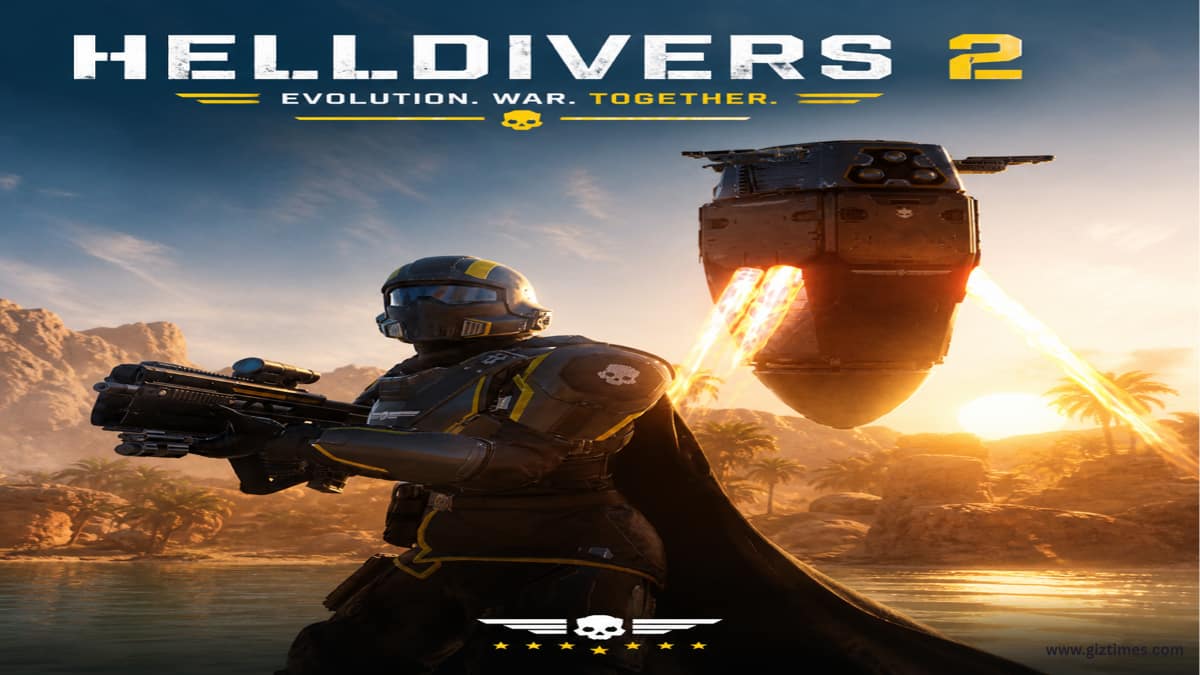
HYDERABAD, India (GizTimes) — Helldivers 2 takes a clear step away from its 2015 predecessor by shifting from a top-down twin-stick shooter into a third-person, squad-based co-op experience. Released on February 8, 2024, it builds on the same core DNA that are team coordination, friendly fire chaos, and a shared galactic war but scales it into a modern live-service ecosystem with continuous updates and cross-platform expansion, including Xbox Series X|S in August 2025.
The tension here isn’t just about evolution, it’s about whether that evolution improves gameplay clarity and performance, or complicates it through live-service systems and monetization layers that didn’t exist in the original.
Why This Matters in Gameplay
The shift from isometric to third-person fundamentally changes how players experience combat. In Helldivers (2015), visibility was controlled and predictable. Players had full battlefield awareness, which made friendly fire a tactical responsibility. In Helldivers 2, that same mechanic exists, but the perspective introduces chaos through limited visibility and spatial awareness. The result is a more immersive but less readable combat loop.
The stratagem system remains the backbone in both games, but its execution now demands faster reactions under pressure due to the perspective shift. Calling in airstrikes or supply drops in Helldivers 2 isn’t just about input accuracy, it’s about surviving long enough in a visually dense battlefield to execute it.
Loadouts and builds also carry more weight in the sequel. While the original allowed flexibility, Helldivers 2 pushes players toward defined roles that are stealth, aggression, and support for making team composition more critical than before.
The biggest gameplay change, however, is how the live-service model interacts with progression. In Helldivers (2015), progression was largely contained within gameplay loops and DLC expansions. In Helldivers 2, progression is tied to Warbonds and ongoing content drops, which directly affects how players engage with the core loop over time.
Framework Integration
From a performance standpoint, Helldivers 2 shows clear technical evolution. It moved from lightweight hardware requirements, like 4GB RAM and legacy GPUs to modern CPU expectations and larger file sizes that required post-launch optimization. Continued updates have improved performance, but the scale of the game demands more consistent hardware capability compared to the original’s accessibility.
Crossplay is another major shift. Helldivers (2015) supported cross-play within PlayStation platforms, but Helldivers 2 expands this across PC, PlayStation 5, and eventually Xbox. This dramatically increases the player pool, but also introduces performance variability across platforms that didn’t exist before.
On the issues side, the biggest friction point isn’t raw performance, it’s system complexity. The Warbond system introduces a layered progression structure that can feel overwhelming, especially for returning or new players. This is a design issue, not a technical one, but it directly impacts how players experience the game moment-to-moment.
There’s also a subtle design tension: Helldivers 2 wants to be both a chaotic co-op shooter and a long-term live-service platform. These two goals don’t always align cleanly. The more systems you add, the harder it becomes to maintain the immediate clarity that defined the original.
Comparison
Helldivers 2 expands the scale and ambition of the franchise, but that expansion comes with trade-offs in accessibility and system clarity.
| Feature | Helldivers (2015) | Helldivers 2 |
|---|---|---|
| Perspective | Top-down twin-stick | Third-person shooter |
| Core Gameplay | Precision, controlled chaos | Immersive, large-scale chaos |
| Co-op | 4-player (online + local) | 4-player online |
| Friendly Fire | Core mechanic | Core mechanic (more chaotic due to perspective) |
| Stratagem System | Input-based, tactical | Same system, higher pressure execution |
| Progression | DLC-based | Live-service Warbonds |
| Galactic War | Community-driven | Expanded, persistent live-service system |
| Platforms | PS3, PS4, PS Vita, PC | PS5, PC, Xbox Series X |
| Performance Requirements | Low-end compatible | Modern hardware required |
| Crossplay | PlayStation only | Full cross-platform |
Public Reaction Analysis
Community feedback reveals a split perception around the live-service model, specifically the Warbond system.
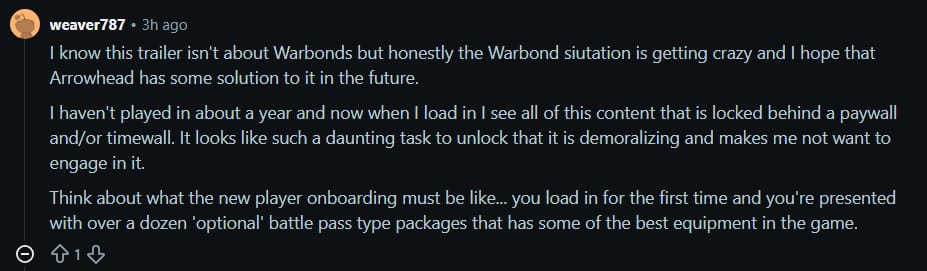
One segment of players sees the system as overwhelming. The concern isn’t just cost, it’s psychological friction. New or returning players are faced with a backlog of locked content, which creates a sense of grind before they even start playing. This directly impacts onboarding, making the game feel like a commitment rather than an immediate experience.
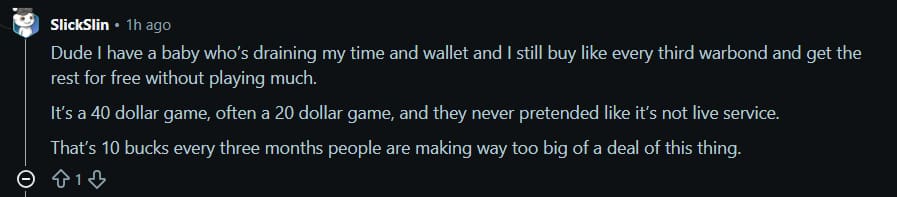
Another group pushes back on that narrative, arguing the monetization is relatively fair for a live-service title. They point out that Warbonds can be spaced out and partially earned without heavy playtime, framing the system as optional rather than restrictive.
The contradiction here is important. The system may be economically reasonable, but perception is shaping player behavior. If players feel overwhelmed, they disengage, even if the system is technically fair.
Why It Matters
Helldivers 2 is positioned as a modern live-service co-op shooter in a market that increasingly demands long-term engagement. Its expansion to Xbox signals a clear intent to grow beyond the traditional PlayStation ecosystem, which is rare for a Sony-published title.
But market positioning isn’t just about reach, it’s about retention. The original Helldivers thrived on simplicity and clarity. Players understood the loop instantly. Helldivers 2, by contrast, risks losing that immediacy under layers of progression systems and content pipelines.
This reflects a broader industry trend. Live-service games often trade initial accessibility for long-term monetization and engagement systems. The challenge is maintaining balance. If onboarding becomes friction-heavy, player growth slows, regardless of how strong the core gameplay is.
Extra Takeaways
There’s a subtle but critical shift in design philosophy between the two games. Helldivers (2015) was built around player discipline that are precision, positioning, and coordination. Helldivers 2 leans into player chaos that are spectacle, scale, and unpredictability.
That shift aligns with modern multiplayer trends, but it also changes the identity of the experience. The game is less about mastering a system and more about surviving it.
Another overlooked detail is how the global war system scales. In the original, it felt like a shared effort. In Helldivers 2, with a larger player base and live-service updates, individual contribution feels less visible, even if the system itself is more advanced.
If successful, Helldivers 2 could redefine large-scale co-op shooters in the live-service era, but its growing system complexity risks pushing away the very players who made the original work.
