

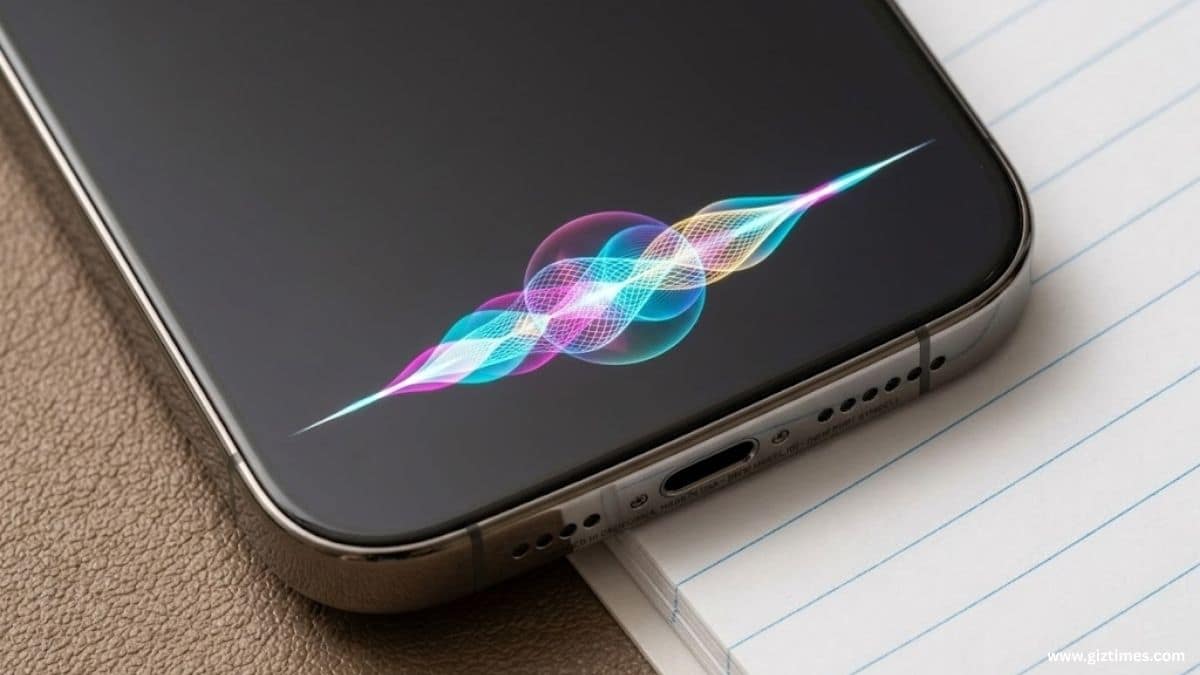
HYDERABAD, India (GizTimes) — Apple plans a big change for Siri. It will let other smart AI services join in, like Google’s Gemini and Anthropic’s Claude. This builds on its current link with ChatGPT. In the upcoming iOS 27 update, third-party AI apps from the App Store can connect directly to Siri. You decide which AI takes your question. Say Hey Siri and pick Gemini for quick facts or Claude for deep thoughts. Apple is creating simple tools to make these apps work smoothly with Siri and its Apple Intelligence features. This turns the iPhone into a hub for any AI you want.
Why do this now? Apple needs to catch up; Siri launched more than 10 years ago. It handles basics well but falls short on smart chats compared to rivals. By teaming with others, Siri gets a boost without Apple building everything alone. Developers gain easy access to send tough tasks to outside AIs, while Siri keeps everyday stuff fast and private.
There’s money in it, too. Apple could grab a cut of up to 30% from subscriptions to these AI services sold through its store. Think of it like app purchases today. This openness might spark a wave of new AI apps. Apple has not commented yet, the company may preview these features at its Worldwide Developers Conference in June. But plans can still shift.
This fits the big AI trend. Tools like Gemini handle images and video, while Claude shines at reasoning. Apple’s once-closed world is opening up. Users in India or anywhere get a custom Siri, maybe Gemini for local cricket scores, or Claude for recipe tweaks. Hey Siri becomes your AI picker.
Privacy is very important to Apple. Its system, Apple Intelligence, tries to keep most of your data on your phone so it stays safe. But when Siri sends questions to online AI tools, some information may go outside your device. Because of this, some people may worry about privacy, especially when other companies are involved. Apple will likely give users more control, like asking permission (opt-ins) or letting them limit what is shared.
For app developers, this is a big opportunity. For example, a fitness app could let Siri talk to an AI coach about your workout. A study app could use Claude to explain difficult topics like math. With more than 2 billion iPhones in use, this could bring many new ideas to the App Store and make people use apps more often.
The announcement sparked curious and analytical reactions on Twitter, especially around AI features and competition.
One user questioned whether rival AI assistants will truly be able to perform actions across apps on the iPhone or if it will just work like a simple handoff system similar to ChatGPT, showing doubt about whether this will actually improve Siri.

Another user showed excitement and curiosity, asking how powerful the system will become once it is fully enabled.

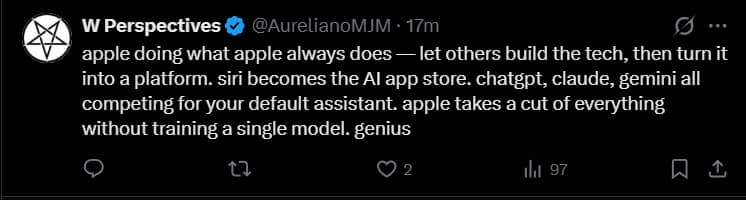
Meanwhile, another user shared a thoughtful idea, saying Apple might turn Siri into a platform where different AI services compete. This way, Apple can benefit from them without making its own AI, which they think is a smart move.
Expect live demos at WWDC: Siri passing a weather query to Gemini or brainstorming with Claude. Over time, iOS turns into an AI switchboard, not just one tool. No single company controls AI anymore. Apple is opening up Siri to other companies so it can improve faster. This means Apple might risk falling behind in its own technology, but it gains better features and gives users more choice.
For everyday users, this means a smarter phone without needing to switch between apps. Siri is no longer just a basic helper; it’s becoming a gateway that connects you to many different AI tools.
