

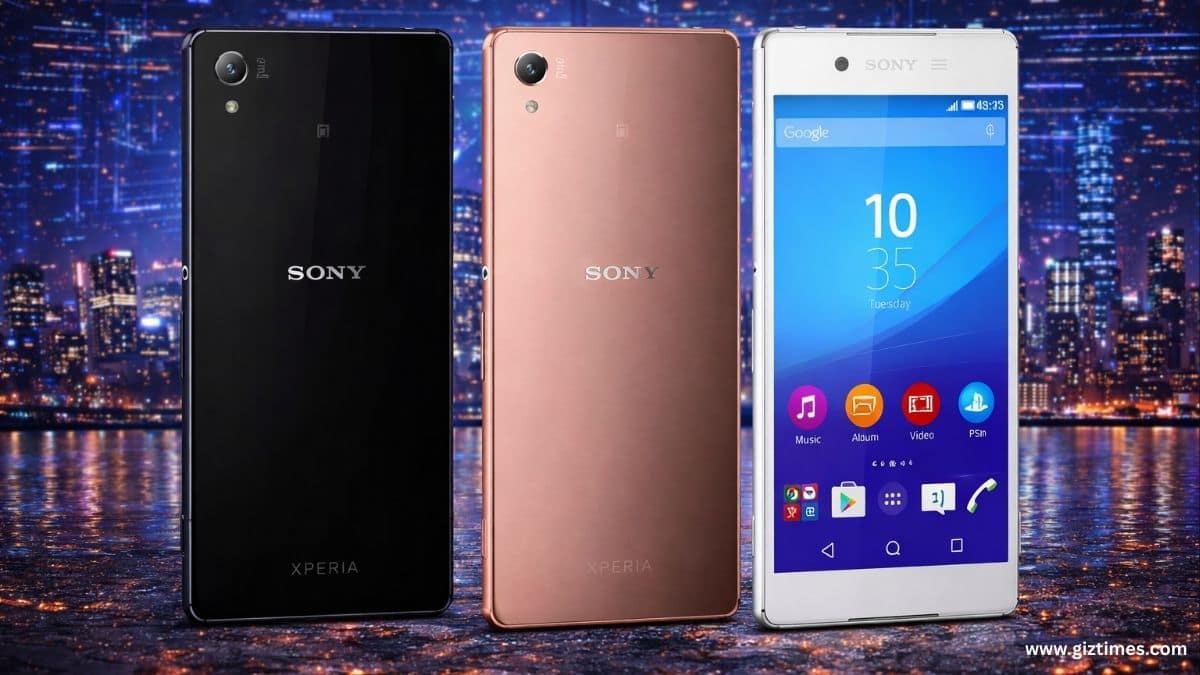
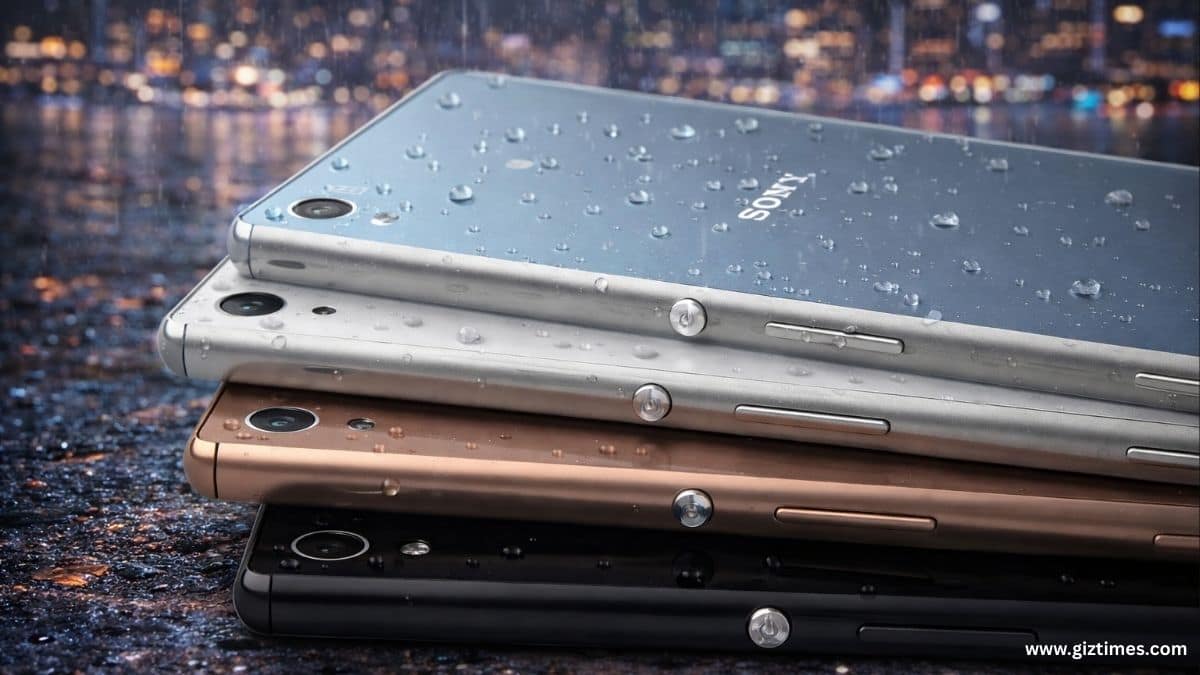
Sony introduced the Xperia Z4 in April 2015 as its new flagship smartphone in the Xperia Z series. The phone continued Sony’s well-known design style with glass on the front and back and a slim metal frame. It also kept one of Sony’s biggest advantages at the time—strong water and dust resistance.
The device had an IP68 rating, which meant it could survive being in water for a short time. In many international markets, Sony sold the same phone under a different name, the Xperia Z3+, with almost the same specifications.
The Xperia Z4 focused on improving the previous model rather than making big changes. Sony made the phone thinner and slightly lighter than the Xperia Z3. It measured 146 × 72 × 6.9 mm and weighed 144 grams. One noticeable improvement was the USB charging port, which no longer needed a protective flap even though the phone remained waterproof. Sony also kept the dedicated camera shutter button on the side, which made it easier to take photos quickly.
The phone came with a 5.2-inch IPS LCD display with a resolution of 1920 × 1080 pixels and a pixel density of about 424 ppi. Sony used its TRILUMINOS display technology to improve color quality and viewing experience. While some other flagship phones in 2015 started using Quad HD screens, Sony chose to keep a Full HD display because it balanced picture quality and battery usage.
Inside the phone was the Qualcomm Snapdragon 810 processor, which was one of the most powerful mobile chips available in 2015. The processor used an octa-core CPU with four Cortex-A57 cores running up to 2.0 GHz and four Cortex-A53 cores running up to 1.5 GHz. Graphics were handled by the Adreno 430 GPU. The Xperia Z4 included 3 GB of RAM and 32 GB of internal storage. Users could also expand the storage with a microSD card up to 128 GB.
Sony continued its focus on camera technology in the Xperia Z4. The phone had a 20.7-megapixel rear camera using Sony’s Exmor RS sensor. It supported high-resolution photos and could record 4K video at 3840 × 2160 resolution. The camera also included features such as autofocus, LED flash, HDR, and digital zoom. On the front, the phone had a 5.1-megapixel camera with Sony’s Exmor R sensor and a wide-angle lens designed to capture better selfies.
The Xperia Z4 used a 2930 mAh non-removable lithium-polymer battery. Sony also included its STAMINA power-saving mode, which reduced background activity to help the battery last longer.
The phone launched with Android 5.0 Lollipop and Sony’s custom Xperia user interface. It included several Sony apps such as the Walkman music app, Album photo gallery, and Movies video player, along with standard Google apps like Gmail, Google Maps, and the Play Store.
For connectivity, the device supported 4G LTE networks, Wi-Fi 802.11 a/b/g/n/ac, Bluetooth 4.1, NFC, GPS, and FM radio. It also had a 3.5 mm headphone jack. Sony added audio features like ClearAudio+, DSEE HX sound enhancement, Hi-Res audio support, and stereo speakers to improve music and video playback.
Like many other phones using the Snapdragon 810 processor, the Xperia Z4 received some criticism for overheating during heavy use, especially while recording 4K video. Sony later released software updates to reduce this issue.
The smartphone was released at a price of about $529, which was roughly ₹35,000 to ₹36,000 depending on the market. It was available in four colors: White, Black, Copper, and Aqua Green.
Even though the upgrade was not very large, the phone still stood out in 2015 because of its waterproof design, high-resolution camera, expandable storage, and strong multimedia features.
