

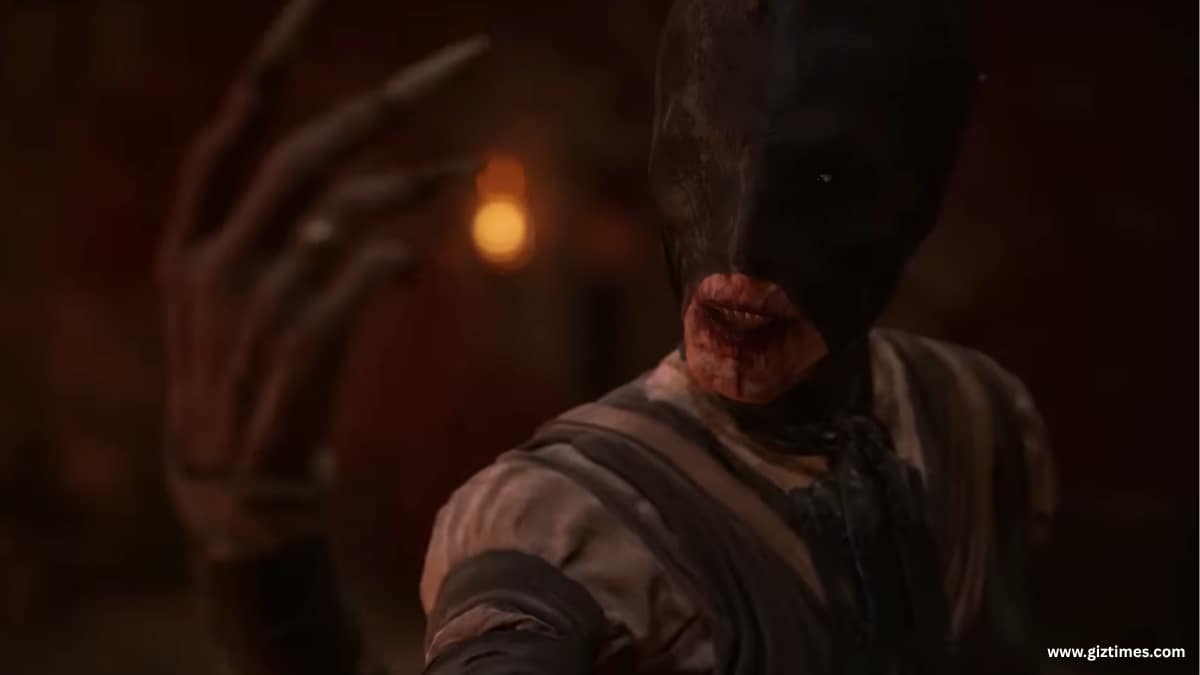
HYDERABAD, India (GizTimes) — The Blood of Dawnwalker enters the RPG space with a clear ambition: redefine player-driven storytelling through systemic design. Built on Unreal Engine 5 and targeting PC, PS5, and Xbox Series X|S for a 2026 release, it leans heavily into freedom and have dual identity mechanics, a time-limited narrative, and a sandbox structure that removes traditional quest constraints.
The comparison with The Witcher 3: Wild Hunt isn’t optional, it’s inevitable. Not just because of shared developer DNA, but because Dawnwalker is positioning itself in the exact space Witcher 3 helped define: narrative-heavy open-world RPGs. The tension here is clear that can systemic freedom outperform crafted narrative precision?
Why This Matters in Gameplay
Dawnwalker’s core gameplay loop is built around contrast. During the day, players engage in grounded systems that is sword combat, ritual magic, social interaction. At night, the game flips into a power fantasy with enhanced traversal and aggressive combat abilities.
This isn’t just a gimmick, it directly impacts how players approach situations. Combat, exploration, and even decision-making shift depending on time. The 30-day cycle adds pressure, forcing prioritization. You’re not just choosing what to do, you’re choosing what to abandon.
In contrast, The Witcher 3 offers freedom within structure. Its quests branch, but they’re authored experiences. Dawnwalker removes that safety net entirely. There’s no guaranteed “best path,” and more importantly, no way to experience everything in one playthrough.
From a gameplay perspective, this creates a different kind of tension. Witcher 3 rewards thoroughness. Dawnwalker enforces sacrifice.
Framework Integration: Performance + Top Issues
From a performance standpoint, Dawnwalker’s use of Unreal Engine 5 signals high visual ambition, but also raises concerns. The input data does not include concrete frame rate targets, resolution benchmarks, or optimization details across platforms. That absence matters, especially when compared to Witcher 3’s well-documented technical evolution, including its next-gen update with ray tracing and improved load times.
This lack of performance transparency creates uncertainty around how well Dawnwalker’s systems will scale across PC and consoles. Its designs are dynamic world states, dual gameplay loops, and systemic consequences which demands consistent performance. Any instability could directly impact gameplay flow, especially within a time-limited structure.
The more immediate issue, however, comes from early community reactions: combat feel.
Players are consistently pointing to animation quality and combat feedback as weak points. Terms like unsatisfying and not good appear repeatedly. This isn’t a minor complaint. In a game where combat shifts between human and vampire states, fluidity isn’t optional, it’s foundational.
There’s also hesitation around value perception. With a $70 price tag mentioned in reactions, players are already comparing it against other upcoming titles and questioning whether it’s a day-one purchase.
The combination here is risky: high systemic ambition paired with early doubts about core mechanics.
Comparison
Dawnwalker and Witcher 3 approach RPG design from opposite directions. One prioritizes systemic freedom, the other curated depth.
| Feature | The Blood of Dawnwalker | The Witcher 3: Wild Hunt |
|---|---|---|
| Engine | Unreal Engine 5 | REDengine 3 |
| Structure | Narrative sandbox (no strict main quest) | Structured quests with branching outcomes |
| Core Mechanic | Dual identity (human/vampire) | Hybrid combat (swords, magic, alchemy) |
| Time System | 30-day progression limit | No time constraints |
| World Design | Hand-crafted open world (dynamic consequences) | Massive seamless world with authored regions |
| Player Freedom | Extreme (actions reshape world entirely) | High, but within designed narratives |
| Performance Data | Not specified | Next-gen update with ray tracing, faster load times |
| Market Status | Upcoming AAA RPG | Established genre benchmark |
Public Reaction Analysis
Community sentiment is cautiously optimistic, but not confident.
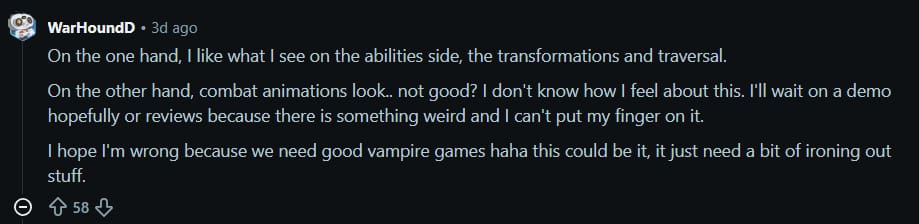
There’s clear excitement around the concept. Players are drawn to the dual identity system, traversal mechanics, and the promise of a strong vampire RPG. That’s a niche with demand, and Dawnwalker is tapping into it effectively.
But the hesitation is consistent and focused: combat.


Multiple reactions highlight animation quality and lack of impact. What’s interesting isn’t just the criticism, it’s the uncertainty. Players aren’t outright rejecting the game, but they’re withholding commitment. Phrases like “wait for reviews” and “not a day one buy” indicate a trust gap.
Another pattern emerges around competition. Players are already prioritizing other titles over Dawnwalker, suggesting that its current presentation isn’t strong enough to dominate attention even within its own genre space.
The contradiction is clear: strong concept, weak execution signals.
Why It Matters
This situation directly impacts Dawnwalker’s market positioning.
The Witcher 3 didn’t just succeed because of its systems, it succeeded because every system felt polished and intentional. Dawnwalker is attempting to push beyond that with systemic storytelling, but that raises the bar for execution, not lowers it.
In today’s RPG market, players expect both freedom and refinement. Live-service expectations have conditioned players to demand updates, but single-player RPGs still rely heavily on launch quality. There’s less tolerance for “it will improve later.”
If Dawnwalker launches with combat issues or inconsistent performance, its core innovation is player-driven storytelling and may never get the attention it deserves.
Extra Takeaways
There’s a deeper implication in Dawnwalker’s design that isn’t immediately obvious: its time-limited system fundamentally changes how players emotionally engage with the world.
In Witcher 3, players explore because they can. In Dawnwalker, players explore despite knowing they will miss content. That shift introduces a different kind of replayability that one driven by regret and curiosity rather than completionism.
But this only works if players trust the experience enough to replay it. Right now, that trust isn’t fully there.
If successful, The Blood of Dawnwalker could redefine systemic storytelling in RPGs, but unresolved combat and performance concerns risk holding it back from competing with genre-defining titles like The Witcher 3.
