

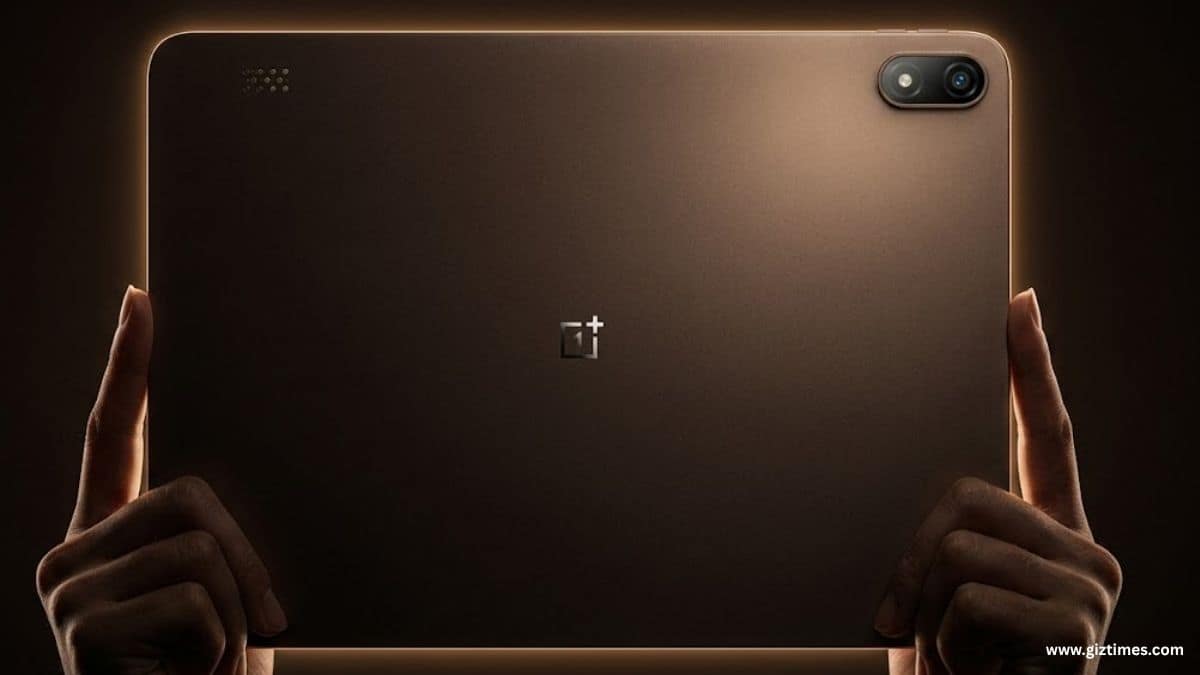
HYDERABAD, India (GizTimes) —The 2026 premium tablet space is no longer about raw power; it’s about how that power is delivered. The OnePlus Pad 4 enters with near-flagship performance at a significantly lower expected price of around ₹60,000, directly challenging devices like the Samsung Galaxy Tab S11 Ultra. The tension is clear: OnePlus is compressing the performance gap, while Samsung is expanding the experience gap. The real question is no longer which is more powerful but whether performance alone is enough to compete at the top.
Why This Product Exists
The OnePlus Pad 4 exists to remove performance as a premium differentiator. By using the Snapdragon 8 Elite Gen 5, along with LPDDR5X RAM and UFS 4.0 storage, it ensures that users can run heavy workloads, 4K editing, multitasking, and high-performance apps without needing to pay ultra-premium prices.
Samsung’s approach is fundamentally different. The Galaxy Tab S11 Ultra uses the same chipset but pushes it further with higher sustained clock speeds and a performance-first architecture.
This creates a clear split in philosophy:
OnePlus is trying to make flagship performance accessible, while Samsung is trying to make the flagship experience complete.
Processor Longevity + Real-World Sustainability
On paper, both tablets are built on the same Snapdragon 8 Elite Gen 5. That immediately neutralizes the usual longevity concern; neither device will feel outdated anytime soon.
But longevity is not just about how fast a device is today; it’s about how long it can sustain that performance under real-world conditions.
The Galaxy Tab S11 Ultra, with its higher clock speeds (up to 4.61 GHz) and stronger thermal design, is built to maintain performance under prolonged stress, long editing sessions, intensive multitasking, and AI-heavy workloads.
The OnePlus Pad 4, despite delivering an AnTuTu score of over 4.1 million and a 20% performance boost over its predecessor, is tuned more toward efficient peak performance than sustained extremes.
Here’s where the difference becomes actionable. If your workflow involves sustained loads of 30 minutes or more, such as video rendering, continuous gaming, or AI-heavy processing, the Galaxy Tab S11 Ultra’s thermal headroom can maintain roughly 10–15% higher sustained output. For shorter tasks under 10 minutes, this difference is practically negligible.
In practical terms, both tablets will age similarly in capability, but not in consistency. The Samsung device is engineered to stay stable under pressure for longer, while the OnePlus device prioritizes delivering peak performance more efficiently at a lower cost.
The real disruption here is not that OnePlus is matching Samsung in performance; it’s that performance is no longer a premium differentiator. What Samsung is actually selling now is performance stability and ecosystem depth, not raw power, and that’s much harder to communicate to buyers who focus on specs.
Comparison
This is one of the rare cases where two devices share the same performance ceiling but differ in how reliably they can sustain it and how complete the overall experience feels.
| Feature | OnePlus Pad 4 | Samsung Galaxy Tab S11 Ultra |
|---|---|---|
| Processor | Snapdragon 8 Elite Gen 5 | Snapdragon 8 Elite Gen 5 |
| Performance Gain | +20% over previous gen | Higher sustained clocks (up to 4.61 GHz) |
| AnTuTu Score | >4.1 million | 4,186,268 |
| RAM | Up to 12GB LPDDR5X | Up to 12GB LPDDR5X |
| Storage | Up to 512GB UFS 4.0 | Up to 512GB UFS 4.1 |
| Display | 13.2-inch, 3.4K, 144Hz LCD | 13.2-inch, 3.4K, 144Hz LCD/AMOLED |
| Battery | 13,380 mAh | 13,380 mAh |
| Charging | 80W SUPERVOOC | 80W fast charging |
| Software | OxygenOS 16 (AI + Open Canvas) | OxygenOS 16 + DeX + AI tools |
| Price (India) | ~₹60,000 (expected) | Ultra-premium segment |
If your usage is burst-heavy apps, multitasking, gaming, and occasional editing, the OnePlus Pad 4 delivers around 90–95% of the performance for significantly less money.
If your usage involves long-duration workloads, extended editing sessions, complex multitasking across multiple apps, or replacing a laptop, the Galaxy Tab S11 Ultra becomes the more reliable and consistent option.
In simple terms, this is no longer just a spec comparison; it’s a segmentation of users. OnePlus targets performance-per-rupee buyers, while Samsung targets users who need sustained performance and a complete ecosystem experience.
Public Reaction Analysis
User reactions reveal a gap between what is improving and what users actually notice.
Some users dismiss the upgrade because there are no visible changes, such as OLED displays or major design shifts. At the same time, others point out efficiency improvements, less heat, and better battery behavior.
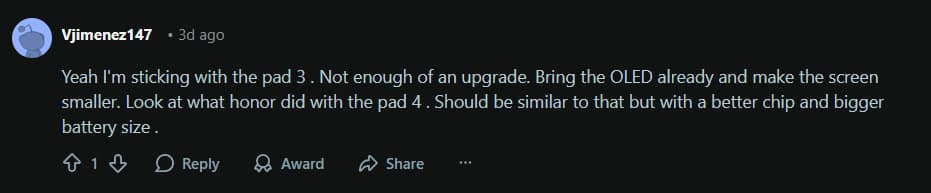
 This creates a perception gap: OnePlus is improving the invisible layers (efficiency, thermals, performance tuning), while users are demanding visible upgrades (display technology, form factor). That disconnect risks making meaningful improvements feel insignificant, even when they directly impact real-world usage.
Why It Matters
This comparison fundamentally changes how premium tablets should be evaluated.
If your usage is performance-focused, the price gap is becoming harder to justify. OnePlus is effectively removing performance as a reason to spend more.
But Samsung is shifting the definition of premium itself, focusing on sustained performance, ecosystem integration, and overall refinement.
OnePlus is making flagship performance more accessible, but Samsung is redefining what premium actually means. The problem for OnePlus is that as performance becomes standard, buyers start valuing everything else more, and that’s exactly where Samsung still leads.
Other Takeaways
What’s happening here is a strategic shift in the market. OnePlus is closing the gap from below, while Samsung is moving up by strengthening the experience rather than specs.
This creates two distinct buyer profiles: value-driven users who prioritize performance per rupee, and experience-driven users who prioritize consistency, ecosystem, and long-term reliability.
The upcoming April 30 launch will likely determine whether OnePlus’s value-first flagship strategy succeeds or fails.
Read More:
